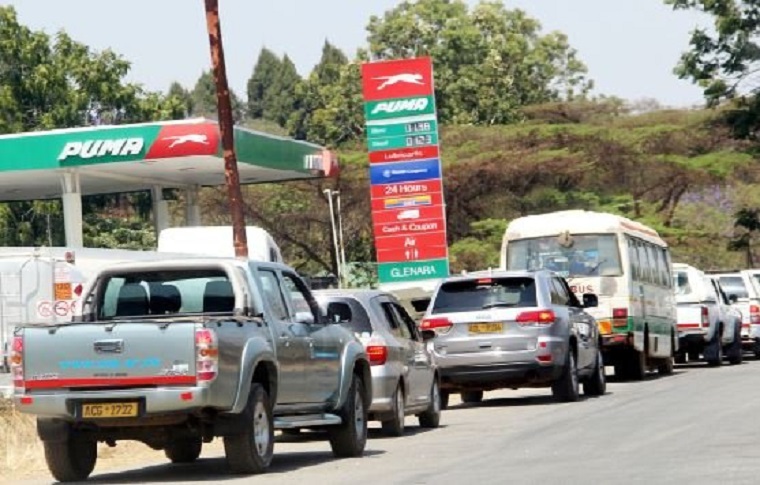
Figures recently released by the Zimbabwe National Statistics Agency (ZImstat), capturing data up to November, show that fuel imports amounted to US$499.19 million last year, a sharp decline from US$1.2 billion in 2019.
Between 2017-2019, Zimbabwe’s annual imports averaged US$1.3 billion.
Several factors account for the dramatic decline.
NewZWire looks at the key factors behind the shift in Zimbabwe’s fuel consumption.
Lockdown downturn
The shutting down of much of the economy when the country went under lockdown early April could partly explain the fuel consumption pattern. Overall, the economy contracted by 7.5%, according to the government.
The first phase of the COVID-19 lockdown almost brought the economy to a halt, cutting April’s fuel consumption by half to 74 million litres from 143 million litres in March.
However, 103 million litres of fuel were carted out of the reservoirs in Msasa in May, according to central bank data, more in line with the pre-lockdown monthly average consumption.
This was as the government gradually eased measures from the first ‘hard’ lockdown. The bounce in fuel consumption continued in June, as restrictions continued to be relaxed.
But July saw a collapse in fuel use, even as the country continued to open up, showing factors other than the lockdown had a greater bearing on volumes.
Removal of fuel subsidy
In December 2018, Zimbabwe’s monthly fuel consumption reached 210 million litres, double the previous year’s demand.
At that time, the fuel price was around US$0.40 per litre in real terms, lower than what motorists in oil producer Angola were paying.
Some bottled water brands became more expensive than fuel, in one of the many absurd market distortions created by the fictitious exchange rate prevailing at the time.
Officials routinely attributed the surge in Zimbabwe’s fuel consumption, and attendant shortages, to an expanding economy.
But energy analysts said much of that demand was artificial, driven by sub-economic prices. They also pointed out that because Zimbabwe’s fuel was cheaper compared to its neighbours, much of it was finding its way into the region through smuggling and cross-border truckers who preferred to fuel in the country.
Continued next page
(300 VIEWS)
Page: 1 2
Zimbabwe has been ranked third among the least free countries in Southern Africa but it…
I had always considered it a curse for a wife to die before her husband.…
This is a true story about the challenges and loneliness I faced when my wife…
My first long-form article in booklet form: Why I had a girlfriend two months after…
The editor and publisher of The Insider, Charles Rukuni, has started a whatsapp channel through…
A friend who knows about my legal battle with Zimbabwe’s richest man, Strive Masiyiwa, way…