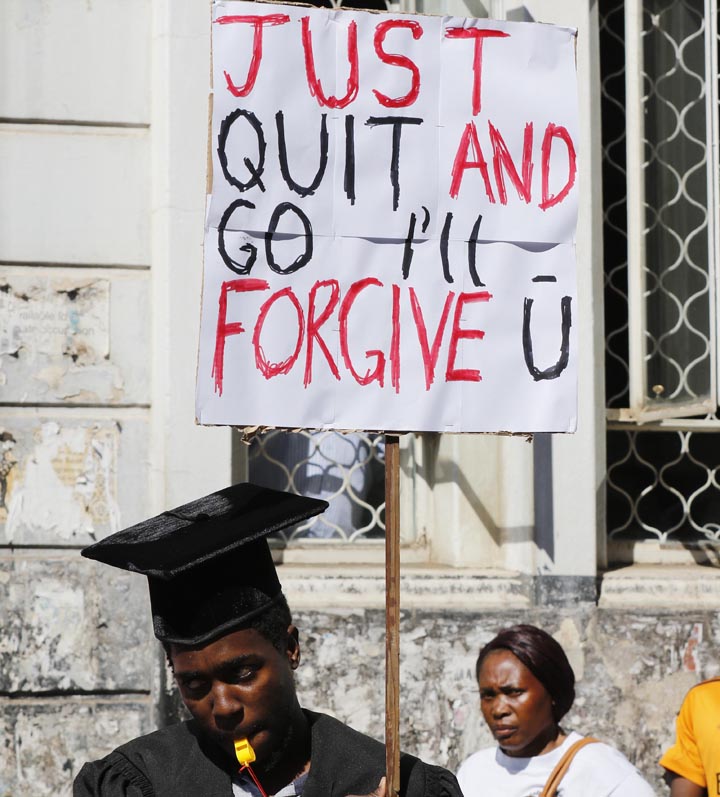
Zimbabwe’s anti-riot police fired tear gas and used baton sticks to disperse a peaceful protest over the planned introduction of bonds notes and lack of jobs, the latest such action against President Robert Mugabe’s stewardship of the economy.
The government plans to introduce local bond notes to tackle a biting cash shortage in the economy. But the notes are seen as an attempt to reintroduce a much hated local currency, which it scrapped in February 2009 after hyperinflation reached 500 billion percent.
The southern African country has witnessed an upsurge in anti-government protests in recent months, including the biggest shut down in a decade instigated by activist pastor Evan Mawarire’s #ThisFlag movement in July.
Today’s protest went ahead after the High Court overruled a police objection and the marchers presented a petition against the bond notes at ministry of finance offices in central Harare. But plans to submit a petition on joblessness to the National Assembly were crushed by the police outside the Parliament building.
Mugabe’s former deputy, Joice Mujuru yesterday launched a Constitutional Court challenge against the introduction of the bond notes, which she said was unconstitutional.
Hundreds of gowned graduates joined the march after police refused to sanction their march against joblessness, three years after Mugabe promised to deliver more than two million jobs by 2018 during the campaign for the 2013 elections.
Last week, the graduates voiced their displeasure at the state of the economy by vending mobile phone airtime and assorted goods on Harare’s crowded pavements.
According to the official statistics agency, Zimbabwe’s unemployment rate stands at 11.3 percent, but independent analysts hotly dispute the figure – which captures huge swathes of the informal and communal farming sectors.
Independent analysts put Zimbabwe’s jobless rate northwards of 90 percent.
With an estimated 300 000 graduates walking out of Zimbabwe’s 16 universities and extensive technical college network annually, the country’s floundering economy, starved of investment and job creation, can scarcely absorb enough young job seekers.
After a decade-long economic crisis, during which GDP shrunk by as much as 40 percent according to official figures, Zimbabwe saw an average growth of seven percent between 2009 and 2012 during a power-sharing agreement with the opposition but the wheels have since come off following Mugabe’s disputed re-election.
Mugabe, 92, and in power since independence from Britain in 1980, is coming under pressure from an increasingly restive populace and veterans of Zimbabwe’s liberation war, who last month called on him to step down.- The Source
(142 VIEWS)
This post was last modified on August 3, 2016 9:00 pm
Zimbabwe has been ranked third among the least free countries in Southern Africa but it…
I had always considered it a curse for a wife to die before her husband.…
This is a true story about the challenges and loneliness I faced when my wife…
My first long-form article in booklet form: Why I had a girlfriend two months after…
The editor and publisher of The Insider, Charles Rukuni, has started a whatsapp channel through…
A friend who knows about my legal battle with Zimbabwe’s richest man, Strive Masiyiwa, way…