A leading stock market analyst has warned that Treasury Bills (TBs) being issued by the Zimbabwe government are now carrying a high risk profile as the state’s fiscal space shrinks.
With no access to foreign money, Zimbabwe’s budget is funded entirely through tax collections and has turned to the local market, with TBs the primary instrument for raising the cash.
The government, however, is struggling to meet cash and at the weekend, the Zimbabwe Revenue Authority reported that it had missed the target by six percent in the three months to June 30.
In the first quarter, it missed the target by 16 percent.
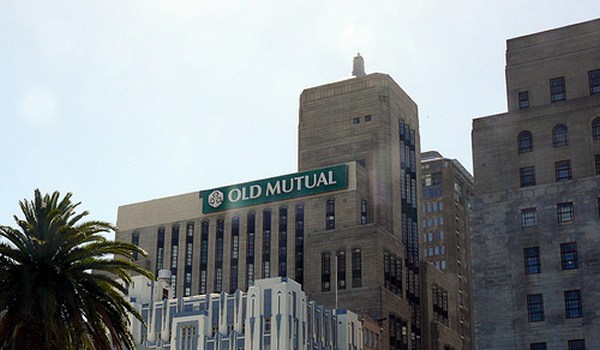
Old Mutual Securities, a unit of the Zimbabwe Stock Exchange-listed financial services giant, Old Mutual Limited, estimates that the government is currently faced with TBs with a maturity call of $1.6 billion, which it said was unsustainable.
Analysts say those who are being paid through TBs were simply discounting the securities in the local market and wiring the real money out of the system.
The discord has forced the Zimbabwe Stock Exchange to act to shed light on the performance of the TBs.
“In order to increase transparency over the performance of debt securities issued by government, the ZSE is in the final stages of approving the listing rules for debt instruments on the ZSE,” said OMS in an analysis for the period to June 30.
“This would certainly go a long way in answering the questions surrounding the performance of government paper. We however maintain that the government has taken up an unsustainable debt profile given its revenue performance.
“We conservatively estimate that government debt instruments have a maturity call of some $1.6 billion arising from the RBZ (Reserve Bank of Zimbabwe) debt assumption bill of $1.35 billion and Treasury Bill issuances being done by the Zimbabwe Asset Management Company (ZAMCO). In light of the above, we believe that government securities carry with them a high default risk in the absence of fiscal space as over 80 percent of government revenues are being consumed by salaries and operational costs,” added OMS.
The government resuscitated the Treasury Bill (TB) market in October 2012. Under the TB system, the government issues “promissory notes” to raise money. Worldwide, TBs are popular because, with government backing, they are virtually risk free. But this is only where markets work well.
In Zimbabwe, these are not backed by performing assets.- The Source
(172 VIEWS)
This post was last modified on August 2, 2016 7:37 pm
Zimbabwe has been ranked third among the least free countries in Southern Africa but it…
I had always considered it a curse for a wife to die before her husband.…
This is a true story about the challenges and loneliness I faced when my wife…
My first long-form article in booklet form: Why I had a girlfriend two months after…
The editor and publisher of The Insider, Charles Rukuni, has started a whatsapp channel through…
A friend who knows about my legal battle with Zimbabwe’s richest man, Strive Masiyiwa, way…