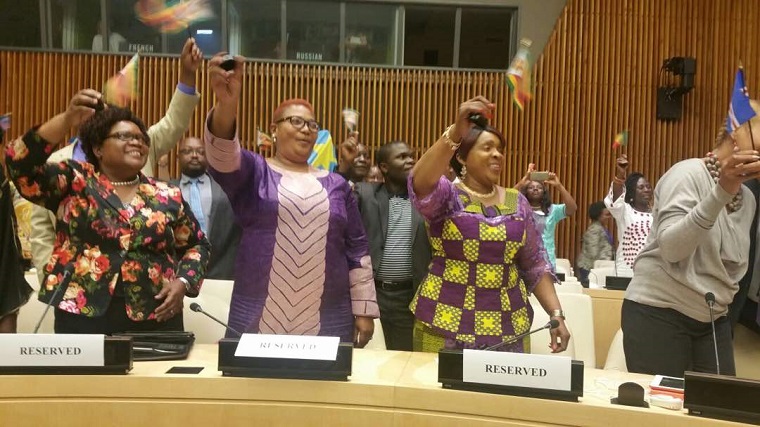
Overnight, the country had jumped up the global rankings for women in Parliament, going from 17% to an impressive 35%.
In Zimbabwe itself, however, women’s rights activists were more restrained. Among other things, they noted that of the 86 female MPs now in the National Assembly, only 26 had been directly elected.
Very few women had actually been put forward for direct contest and won. The remaining 60 had been appointed in accordance with the constitution’s mandatory quotas.
Once in Parliament, these 60 female MPs became known derogatorily as the “Bacossi MPs”, a reference to the 2008 Basic Commodities Supply Side Intervention (Baccossi) subsidies programme on basic goods that were derided as being substandard.
The selection of these MPs by their parties rather than election by the people led them to be perceived as lacking a legitimate mandate. They were assumed to be incompetent and incapable of winning contests based on merit.
The reality behind the 2013 election’s lustre of progress was therefore always more questionable than it seemed. And now, with elections looming again, Zimbabwe’s women seem to be in an even weaker political position.
According to the Women in Politics Support Unit, female nominees make up less than 15% of the candidates that will be standing for the National Assembly on 30 July 2018.
Others have noted the conspicuous absence of women in high level politics and the ongoing resilience of Zimbabwean patriarchy. But it is also worth examining some of the many ways – some more direct or subtle than others – in which this patriarchy manifests and is daily reinforced.
1) Pitting women against each other
For decades, Zimbabwe’s main political parties have pitted female politicians against one another. In 1995, the ruling ZANU-PF allegedly elevated Vivian Mwashita to go up against Margaret Dongo, a vocal human rights defender and critic of corruption within the party. In 2014, ZANU-PF used then first lady Grace Mugabe to lead a smear campaign against then Vice-President Joice Mujuru, accusing her of trying to kill President Robert Mugabe and of promiscuity with top ranking officials in the party. Just this May, the main opposition Movement for Democratic Change (MDC) is alleged to have overseen irregularities in a primary election that saw its favoured candidate Joana Mamombe push out Jessie Majome. Majome was reportedly told she was “old and should retire to the countryside to herd donkeys”.
It is telling that Zimbabwe’s parties feel the need to employ women to attack other women. It is also revealing that there is a tendency for elites to create zero-sum games between female candidates rather than simply supporting multiple qualified nominees.
Continued next page
(252 VIEWS)
This post was last modified on July 13, 2018 12:12 pm
Zimbabwe has been ranked third among the least free countries in Southern Africa but it…
I had always considered it a curse for a wife to die before her husband.…
This is a true story about the challenges and loneliness I faced when my wife…
My first long-form article in booklet form: Why I had a girlfriend two months after…
The editor and publisher of The Insider, Charles Rukuni, has started a whatsapp channel through…
A friend who knows about my legal battle with Zimbabwe’s richest man, Strive Masiyiwa, way…