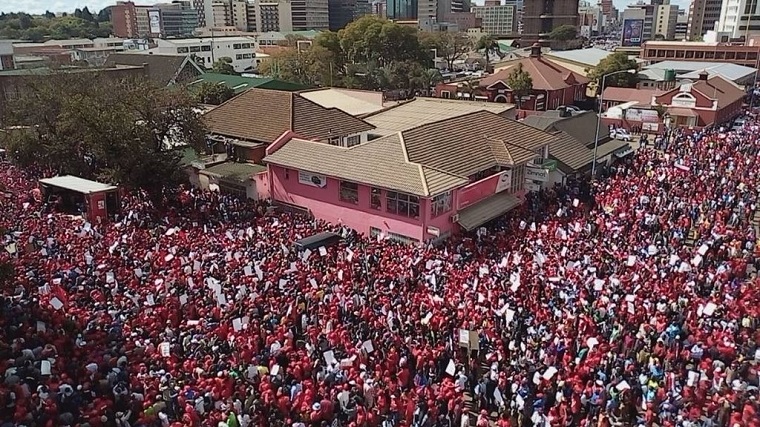
An undisputed, globally endorsed election outcome could result in an economic take off, regardless of who wins between the top contenders, Nelson Chamisa, the candidate for the opposition Movement for Democratic Change Alliance and the incumbent Emmerson Mnangagwa of ZANU-PF.
The consequences of a disputed election are tragic for a country already in the mire wrought by decades on isolationist policies of former ruler, Robert Mugabe, who was deposed by a military coup last November.
Zimbabwe remains in a shaky economic position, which makes it difficult to achieve a sustained growth path without fundamental shifts in policies to do with economic management, and includes indigenisation, fiscal and monetary as well as political legitimacy.
These policies and legitimacy concerns have a direct impact on the southern African country’s ability to reconfigure itself through capital attraction and confidence, ultimately ensuring sustained inclusive economic growth.
The July elections will be the barometer against which such legitimacy issues will be measured. It is widely expected that capital inflows will improve dramatically once elections settle the question of legitimacy and doubts over economic policy and trajectory are addressed and pro-investor policies are in place.
There are only two possible outcomes from the election with sharply varying implications. A free and fair election outcome — which is endorsed by the international community — will likely result in extensive capital inflows, enough to help stabilise and grow the economy.
A disputed, unendorsed election outcome will take Zimbabwe to a complete meltdown.
Some of the positives achieved so far (as contrasted with the previous elections under Mugabe) include: political parties being allowed to campaign, even in the rural areas; and demonstrate freely; international observers invited to monitor the election, improved voter awareness and a largely peaceful campaign.
Negatives include skewed media access — particularly in the public media; lack of transparency on the ballot paper printing; voters roll irregularities, and some isolated incidences of intimidation and violence.
Continued next page
(354 VIEWS)
This post was last modified on July 13, 2018 9:30 am
Page: 1 2
Zimbabwe has been ranked third among the least free countries in Southern Africa but it…
I had always considered it a curse for a wife to die before her husband.…
This is a true story about the challenges and loneliness I faced when my wife…
My first long-form article in booklet form: Why I had a girlfriend two months after…
The editor and publisher of The Insider, Charles Rukuni, has started a whatsapp channel through…
A friend who knows about my legal battle with Zimbabwe’s richest man, Strive Masiyiwa, way…