Republicans have now demanded that any deal must include stricter work requirements for social safety net programs. Biden has hinted that he might be willing to accept such a bargain, drawing a backlash from liberal congressional Democrats, who have begun openly fretting that the president might agree to a deal they cannot accept.
The pushback reflects the political crosscurrents at play in the talks between Biden and McCarthy, both of whom have to contend with slim majorities in Congress and uncompromising political bases that will find any agreement hard to swallow. But the U.S. is essentially living paycheck to paycheck, and the unknown date on which the cash runs out is looming.
Consequences: If Congress does not increase the debt ceiling — the limit on money that the US can borrow — the government may run out of money as early as 1 June. The government would no longer be able to pay its bills, potentially defaulting on its debts. That situation could send the financial markets, and the economy, into chaos.
“We are sailing into uncharted waters,” one expert said.
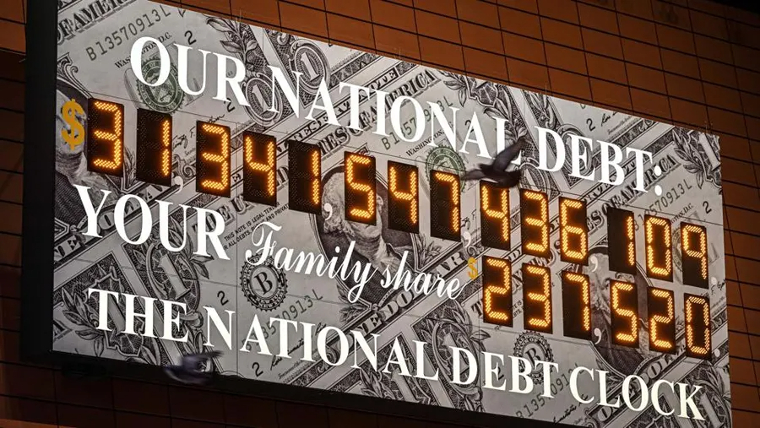
Debt: The US reached its statutory debt limit of US$31.4 trillion on 19 January.-NYTimes
(141 VIEWS)
Zimbabwe has been ranked third among the least free countries in Southern Africa but it…
I had always considered it a curse for a wife to die before her husband.…
This is a true story about the challenges and loneliness I faced when my wife…
My first long-form article in booklet form: Why I had a girlfriend two months after…
The editor and publisher of The Insider, Charles Rukuni, has started a whatsapp channel through…
A friend who knows about my legal battle with Zimbabwe’s richest man, Strive Masiyiwa, way…
View Comments