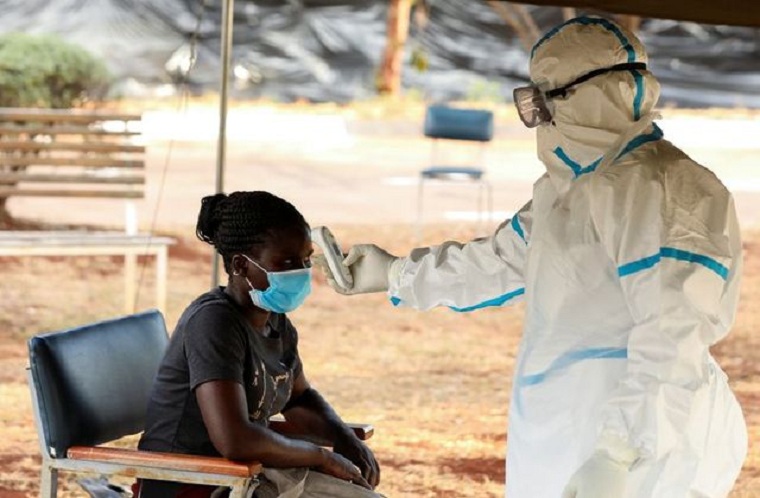
Excitement and fear are how the continent of Africa has been painted for decades – long before malnourished children with flies orbiting the crowns of their head became a staple of charity appeals.
It’s not just British people who have been taught to feel this way. The political and economic upheavals of post-colonial Africa have even coloured how the colonised feel about their lives and their futures.
Africa as a “basket case” is an idea that has infiltrated even Africans’ minds. But the truth is always far more complicated than any lazy stereotype can convey – and recent events have brought that home to me in dramatic fashion.
My family moved to England as economic immigrants wanting to make a better life for their children. The collapse of the Zimbabwean economy in the 1990s spelled the end of their time as freewheeling twenty somethings, raising a small child.
So, in 1996, when I was four, we packed up. England offered education, amenities, healthcare and a stable government.
As children of Rhodesia, where speaking English was mandatory, my parents’ language skills were especially good – they had been taught at the best schools in Salisbury (now Harare). This made their assimilation easier and quicker.
For years, we never looked back. At that time being Zimbabwean was particularly stigmatised and my parents would often deny their true nationality, opting instead for South African.
In year six, I found myself at primary school with a white Zimbabwean. Testing the waters, I’d told her where I was really from, thinking we’d have something in common.
But the ensuing discussion about white Zimbabweans being thrown off their farms on the orders of Robert Mugabe proved too contentious for my little 11-year-old brain, and for years afterwards I assumed my parent’s pseudo-South African identity.
As the political climate settled, so did our qualms. Ten years ago, we began going back to Zimbabwe every other Christmas. At first it was a culture shock. It’s not easy to readapt to a land that you know is yours, but somehow doesn’t feel like that.
That slight discomfort lingered. But flying to Zimbabwe this Christmas felt different. Yes, there was a pandemic on. For the first time, though, I was fully at ease.
Why? It’s no secret that England’s response to the coronavirus pandemic has been at best lacklustre and at worst fatal. Lockdown was delayed until it was too late, frontline workers were left without PPE, testing was woefully inadequate, among many other things.
Continued next page
(252 VIEWS)
This post was last modified on January 18, 2021 9:53 am
Page: 1 2
Zimbabwe has been ranked third among the least free countries in Southern Africa but it…
I had always considered it a curse for a wife to die before her husband.…
This is a true story about the challenges and loneliness I faced when my wife…
My first long-form article in booklet form: Why I had a girlfriend two months after…
The editor and publisher of The Insider, Charles Rukuni, has started a whatsapp channel through…
A friend who knows about my legal battle with Zimbabwe’s richest man, Strive Masiyiwa, way…