The OMIR, which is supposed to be based on the difference between the Old Mutual share price in London and that in Harare, has been used as an exchange rate, especially by investors, since the collapse of the Zimbabwe dollar more than a decade ago.
Old Mutual stopped trading on the Zimbabwe Stock Exchange in June when the government suspended the ZSE from trading.
African Financials now calls what used to be the Old Mutual Implied Rate (OMIR), the Optional Market Implied Rate and says this is a service for investors looking to arbitrage share price and exchange rate mismatch opportunities in African Stock Markets.
The OMIR today rose to $106.37 the highest since 26 May when it stood at $105.57. It peaked at $146.28 on 26 September.
Zimbabwe introduced the foreign currency auction system on 23 June. The Zimbabwe dollar was fixed at $25 from March until then.
The local currency traded at $81.35 for almost the whole of October before falling to $81.67 which it has averaged at the last two auctions on 3 and 10 November.
It fell to its lowest level of $83.40 on 25 August and has averaged less than $82 since 15 September.
As of yesterday, a total of US$437.1 million had been disbursed through the auction system.
The stability of the local currency and the decline in inflation means that any increase in wages is real.
The government yesterday announced a 40 percent increase in wages for civil servants with effect from 1 November.
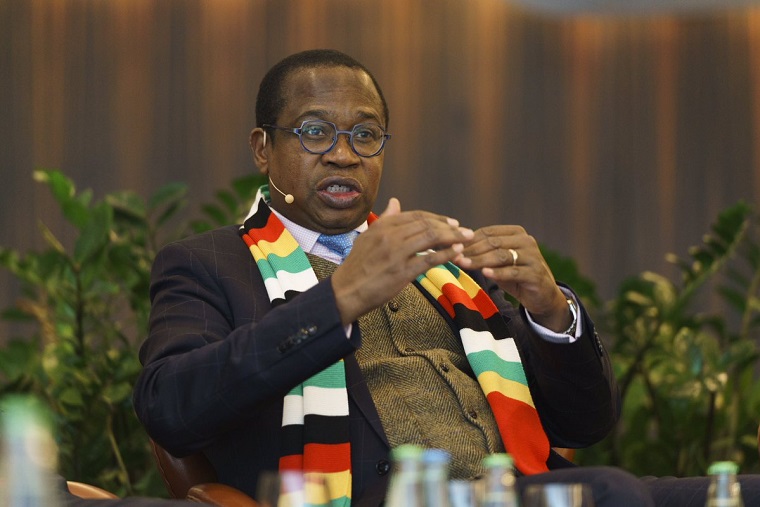
Although teachers have rejected the increase, Ncube was upbeat that the salary increase was real for a change.
“We’re making sure that the ordinary civil servant can be as close to the Poverty Datum Line as possible. So, for example for a teacher that salary is above the Poverty Datum Line. That’s what we’re trying to achieve and we will be able to do this without destabilising the stability,” he said.
“In fact, when you look at the ratios, in terms of the salary to total revenue ratio per month that won’t move much. At the same time, it would have given the employees a decent wage, a wage that is a real increase. You’ll agree with me that when a currency is stable, inflation is falling, an increase in wages is a real increase and that’s a good thing.”
(322 VIEWS)
Four of the world’s largest banks are all in China. Assets of the Industrial and…
Zimbabwe is one of the 27 countries in the world where the richest 0.1% of…
Zimbabwe has been ranked third among the least free countries in Southern Africa but it…
I had always considered it a curse for a wife to die before her husband.…
This is a true story about the challenges and loneliness I faced when my wife…
My first long-form article in booklet form: Why I had a girlfriend two months after…