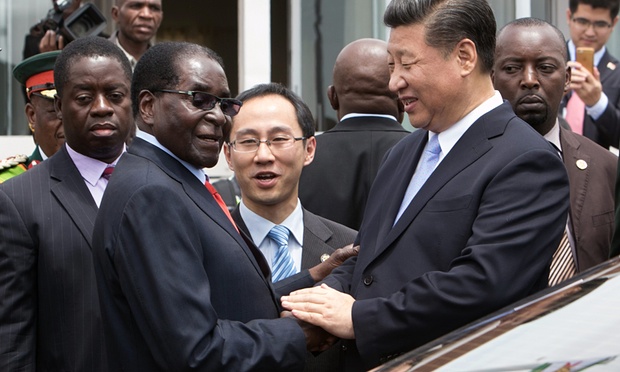
According to Zimbabwean state media outlets, China’s parliament construction pledge was a “gift” to Zimbabwe, as Chinese officials believed that Zimbabwe’s current parliament was too small for its lawmakers to work in effectively.
China’s decision to fund Zimbabwe’s parliament construction follows a string of large business contracts signed between Beijing and Harare.
In recent weeks, China has opened its markets to Zimbabwean farm products, expanded its investments in Zimbabwe’s housing and agriculture sectors, and lent Zimbabwe money to upgrade its medical equipment in inner-city hospitals.
Despite these investment pledges, China has surprised many analysts by not helping President Robert Mugabe repress Zimbabwe’s largest protests in modern times and by not providing Zimbabwe with the loans it needs to avoid insolvency.
China’s unwillingness to help Mugabe retain power is symptomatic of deeper strains in the China-Zimbabwe relationship.
Mugabe’s crackdowns on foreign ownership of Zimbabwean companies have alarmed Chinese investors. Beijing also wants to ameliorate anti-Chinese sentiments in Zimbabwe to ensure that its alliance with Harare will remain intact even if Mugabe’s ZANU-PF party falls from power.
In 2008, Mugabe passed an indigenisation law requiring Zimbabwean nationals to have a majority ownership stake in all Zimbabwean companies possessing over $500 000 in assets.
However, the ZANU-PF government has frequently exempted Chinese companies from its indigenization policy. These exemptions have given China unparalleled access to Zimbabwe’s mineral resources and have entrenched Zimbabwe further into China’s economic sphere.
Zimbabwe’s new indigenization legislation, which took effect on April 1, could cause Chinese companies to be stripped of many of their past exemptions. Zimbabwe’s new business regulations require all foreign companies to submit tangible indigenization plans to the ZANU-PF government for evaluation.
Should foreign companies be non-compliant, the Zimbabwean government has the right to close down their businesses by force. According to Yun Sun, a non-resident fellow at the Brookings Institution, the ZANU-PF’s indigenization policy could jeopardize China’s investments in the Zimbabwean mining sector and bankrupt small businesses owned by Chinese expatriates in Harare.
Continued next page
(443 VIEWS)
This post was last modified on August 15, 2016 2:35 pm
Zimbabwe has been ranked third among the least free countries in Southern Africa but it…
I had always considered it a curse for a wife to die before her husband.…
This is a true story about the challenges and loneliness I faced when my wife…
My first long-form article in booklet form: Why I had a girlfriend two months after…
The editor and publisher of The Insider, Charles Rukuni, has started a whatsapp channel through…
A friend who knows about my legal battle with Zimbabwe’s richest man, Strive Masiyiwa, way…