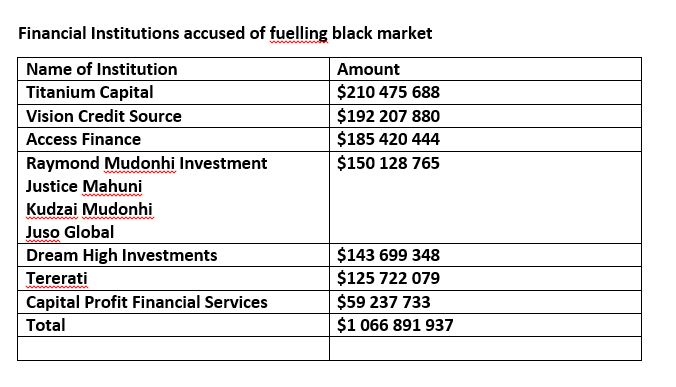
According to The Herald, the eight are Titanium Capital, Dream High Investments, Access Finance, Tererati, Vision Credit Source, Capital Profit Financial Services, Raymond Mudonhi Investment (Justice Mahuni, Kudzai Mudonhi) and Juso Global Limited.
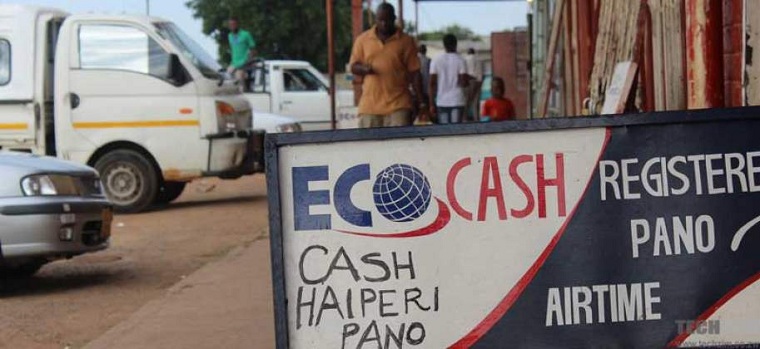
President Emmerson Mnangagwa said in September last year that the government had cracked down on Ecocash after it had discovered that Ecocash had created $8.4 billion in phantom money.
He said that some people with no source of income at all were trading as much as $86 million a day from their Ecocash accounts.
Eddie Cross, a member of the Monetary Policy Committee at the time, said that the central bank discovered that in February alone, Ecocash turned three times the amount that all the country’s 13 commercial bank combined had turned over.
He said that Ecocash’s 96 bulk payers in February alone transferred $3.8 billion to Ecocash trust accounts.
The money was used to buy foreign currency on the black market through some 75 000 agents, pushing the black market rate to as high as $200 to the United States dollar.
The Zimbabwe dollar stabilised when the country introduced the foreign exchange auction market in June last year but the gap between the auction rate and the black market rate has been widening of late.
The local currency is now trading at almost double the auction rate.
(487 VIEWS)
This post was last modified on September 28, 2021 7:45 pm
Zimbabwe has been ranked third among the least free countries in Southern Africa but it…
I had always considered it a curse for a wife to die before her husband.…
This is a true story about the challenges and loneliness I faced when my wife…
My first long-form article in booklet form: Why I had a girlfriend two months after…
The editor and publisher of The Insider, Charles Rukuni, has started a whatsapp channel through…
A friend who knows about my legal battle with Zimbabwe’s richest man, Strive Masiyiwa, way…
View Comments