“Those who defy the markets will eventually lose. They may lose slowly, or lose in a spectacular collapse, but they will lose.” Mark S. Lawson opined in 2011.
Historically, bad policies have been a telling harbinger of a disastrous economic trajectory, and it is in that light that the ideological and political positions adopted by brand Zimbabwe in the past two decades and half should be considered the explanation behind the prevailing disempowering, alienating, and impoverishing economic reality.
Zimbabweans in Zimbabwe worked hard; Zimbabweans in the diaspora supported their kith and kin back home but their wealth was debased, both on an individual and national scale.
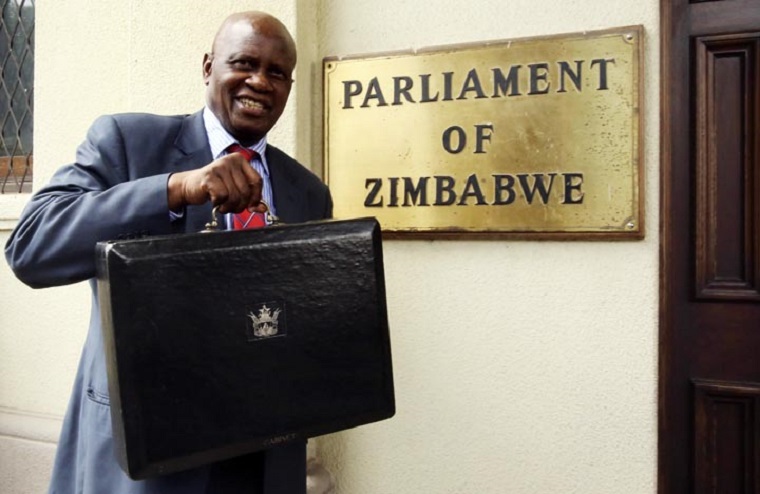
Then come December 7, 2017, the day on which Patrick Anthony Chinamasa, the old ‘new’ Finance and Economic Development Minister presented Zimbabwe’s budget for 2018 under the theme the ‘New Economic Order’.
Is the budget a boon communicating the beginning of better times?
Is brand Zimbabwe, under the new administration of Emmerson Dambudzo Mnangagwa still made up of old wine, going to usher in better days?
The challenges are huge, but the starting point is relatively very low because the Zimbabwe economy has contracted significantly.
The budget deficit for 2017 is expected to be 11.2% of GDP; unemployment levels are estimated to be over 90%; industrial production & productivity is at its lowest in almost five decades; the foreign currency reserves are negligible to non-existent, foreign capital has been hesitant to come to Zimbabwe; there is a biting liquidity crisis; among other metrics.
In that regard, the Mnangagwa administration, albeit its probable short life (it will have to win the harmonised elections scheduled for August 2018 at the latest), has an apparently easier task.
But, did the budget adequately address the challenges faced by Zimbabwe, and if so, is it convincing?
The 2018 budget by Chinamasa is a double-edged sword that could usher in either sunshine or more of the same darkness hitherto experienced.
It emphasizes repeatedly the dawn of a ‘New Economic Order’ built on the vision of the president but ignores the fact that it implicitly predicates its success on the goodwill of custodians of foreign capital.
It claims that Zimbabwe is now open for business and makes a commitment to address the causes that rank Zimbabwe number 159 out of 190 on the World Bank’s Doing Business Index for 2018; (Zimbabwe is also ranked 124 out of 137 on the World Economic Forum Competitiveness Index for 2017 – 2018).
Continued next page
(846 VIEWS)
Zimbabwe has been ranked third among the least free countries in Southern Africa but it…
I had always considered it a curse for a wife to die before her husband.…
This is a true story about the challenges and loneliness I faced when my wife…
My first long-form article in booklet form: Why I had a girlfriend two months after…
The editor and publisher of The Insider, Charles Rukuni, has started a whatsapp channel through…
A friend who knows about my legal battle with Zimbabwe’s richest man, Strive Masiyiwa, way…