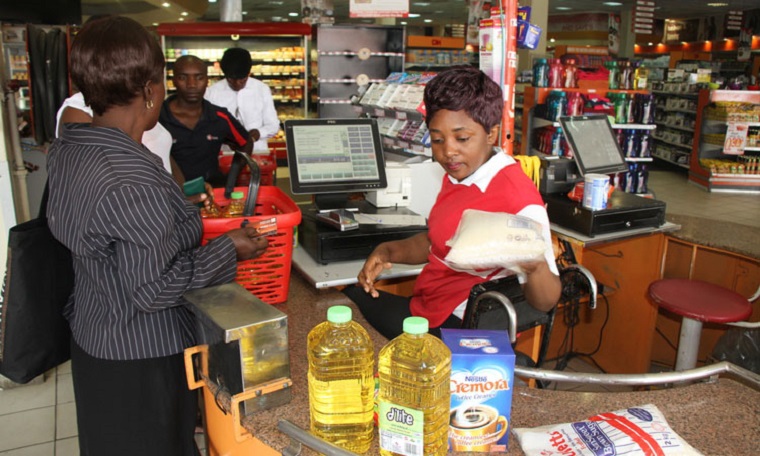
The reason for the commotion is that a rare commodity, which has been almost impossible to find for weeks, is finally on sale: cooking oil.
Elsewhere in the capital and across Zimbabwe, similar scenes have been unfolding recently. The country is in the midst of an economic crisis. Banks lack foreign currency to lend to businesses, leading many to simply close down.
This has led to a situation in which several essential goods have become scarce and inflation has soared. The Zimbabwean bond note, which is officially on par with the US dollar, has been trading at 5-to-1 or even 10-to-1 according to some reports.
Everyone in Zimbabwe is feeling the effects.
Tapiwa Chitakunye, for example, has been struggling to buy medicine for his mother. “The situation is unbearable,” he says. “At some pharmacies, they are saying they have run out of nifedipine, whilst those who still have it are charging exorbitant prices.”
Fuel shortages have also hit particularly hard. Winding queues outside service stations stretch for miles, while public transport costs have skyrocketed, with dire knock-on effects.
“I used to have a budget of $26 per month for transport and now it has tripled,” says Roselyn Magaya, who used to commute from the town of Chitungwiza into Harare. “I decided to leave my job after my employer told me that there was not going to be any salary increase, because he was also feeling the pain.”
Zimbabwe’s economy is straining under the weight of mismanagement, over-spending, debt accumulation and corruption over decades. Former president Robert Mugabe presided over much of this decline, but little has changed since his removal in November 2017.
His successor Emmerson Mnangagwa has repeatedly promised to break with the past and revitalise the economy since coming to office, but things have continued to worsen under his watch. Zimbabwe may have been divided politically in the disputed July elections – in which Mnangagwa narrowly won with 50.8% – but it has been united in its economic woes.
Continued next page
(355 VIEWS)
This post was last modified on November 3, 2018 6:38 pm
Page: 1 2
At least four million people in Zimbabwe reported that they had gone without food on…
Four of the world’s largest banks are all in China. Assets of the Industrial and…
Zimbabwe is one of the 27 countries in the world where the richest 0.1% of…
Zimbabwe has been ranked third among the least free countries in Southern Africa but it…
I had always considered it a curse for a wife to die before her husband.…
This is a true story about the challenges and loneliness I faced when my wife…