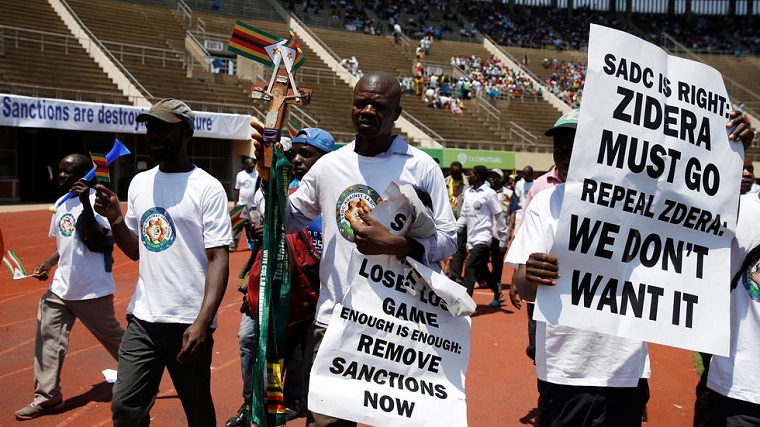
“US sanctions do make it more difficult for targeted individuals and entities to access funds through the global financial infrastructure. Sanctions do not target Zimbabwe’s banking sector, but rather ensure that sanctioned individuals and entities cannot use the US financial system to enjoy their ill-gotten gains. To be very blunt, blaming US sanctions for Zimbabwe’s problems detracts from the core issues of better governance that are required in Zimbabwe, and to that end, Zimbabwe must make reforms consistent with its constitution, with its international obligations, and with its other commitments.”- US State Department spokesman Ned Price responding to a question from Pearl Matibe.
This is the yarn that the United States has been spinning for the past 20 years but unfortunately, some Zimbabweans are buying that. Like abused wives, who blame themselves for being battered by their husbands, some Zimbabweans are singing the US tune and blaming the Zimbabwe government, and not sanctions, for the country’s woes.
Although the United States says its sanctions on Zimbabwe do not hurt the poor, studies on effects of sanctions done by American academics say that even if targetted, US sanctions hit the poor hardest.
Besides, how can the United States claim to be targetting 83 individuals and 37 entities when the Zimbabwe Democracy and Economic Recovery Act states that none of the international financial institutions and multilateral development banks can extend loans to Zimbabwe without the approval of the United States President?
The banks are listed as:
Seung-Whan Choi and Shali Luo of the University of Chicago argue that sanctions are a foreign policy tool meant to coerce target governments to improve things like human rights violations but the “economic pain caused by economic sanctions is likely to be most painful for the poor because such external economic shocks often drive their living standards further below subsistence levels”.
Continued next page
(319 VIEWS)
This post was last modified on October 24, 2021 7:31 pm
Page: 1 2
Zimbabwe has been ranked third among the least free countries in Southern Africa but it…
I had always considered it a curse for a wife to die before her husband.…
This is a true story about the challenges and loneliness I faced when my wife…
My first long-form article in booklet form: Why I had a girlfriend two months after…
The editor and publisher of The Insider, Charles Rukuni, has started a whatsapp channel through…
A friend who knows about my legal battle with Zimbabwe’s richest man, Strive Masiyiwa, way…