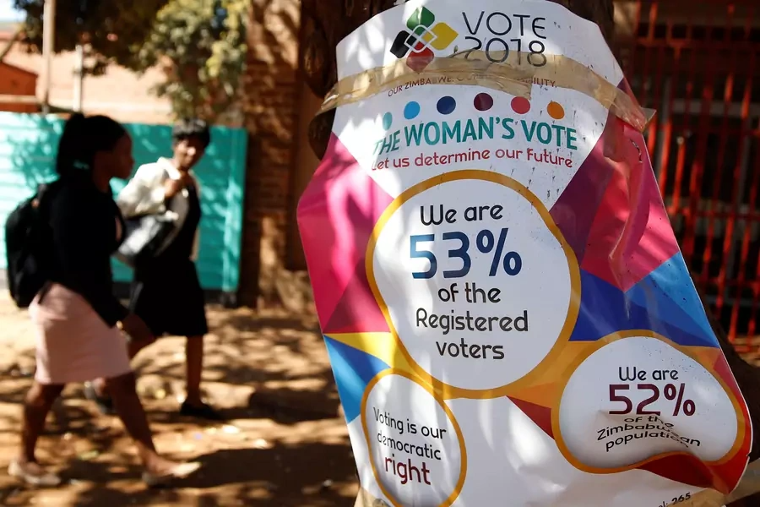
At a recent opposition rally, women with the face of their male party leader emblazoned on dresses and skirts sang, danced and promised to vote for change — never mind that the elections again represent a status quo where women are largely limited to cheerleading.
It appears worse this year because the number of women candidates has plummeted, despite women constituting the majority of the population and, traditionally, the biggest number of voters.
“We have some of the best laws and policies on gender equality and women representation, but that’s just on paper. The reality on the ground is that the role of women in politics is restricted to being fervent supporters and dependable voters,” said Marufu Mandevere, a human rights lawyer in the capital, Harare.
The shortage of women candidates puts Zimbabwe at odds with trends on the continent. According to a report released in March by the Inter-Parliamentary Union, the number of women in national parliaments in sub-Saharan Africa increased from 10% in 1995 to about 27% in 2022. The IPU describes itself as a global organisation of national parliaments established in 1889.
In Zimbabwe, a patriarchal southern African nation of 15 million people, gender-based biases are still rampant. Men have historically dominated the political, economic, religious and social spheres. The 23 August elections suggest that change could be beyond the horizon, despite vigorous local campaigns and global pressure for increased female participation in decision-making.
In the last elections, in 2018, there were four female candidates for the presidency, a record. When nominations closed on 21 June this year, there were 11 male candidates — and no women.
In the end, one woman did manage to qualify for the ballot, but only just. Elisabeth Valerio was one of two women, along with Linda Masarira, who were rejected because they had failed to pay the US$20 000 nomination fee on time, up from US$1 000 in 2018. In July, Valerio successfully challenged the decision in court.
Continued next page
(114 VIEWS)
Page: 1 2
Zimbabwe is one of the 27 countries in the world where the richest 0.1% of…
Zimbabwe has been ranked third among the least free countries in Southern Africa but it…
I had always considered it a curse for a wife to die before her husband.…
This is a true story about the challenges and loneliness I faced when my wife…
My first long-form article in booklet form: Why I had a girlfriend two months after…
The editor and publisher of The Insider, Charles Rukuni, has started a whatsapp channel through…