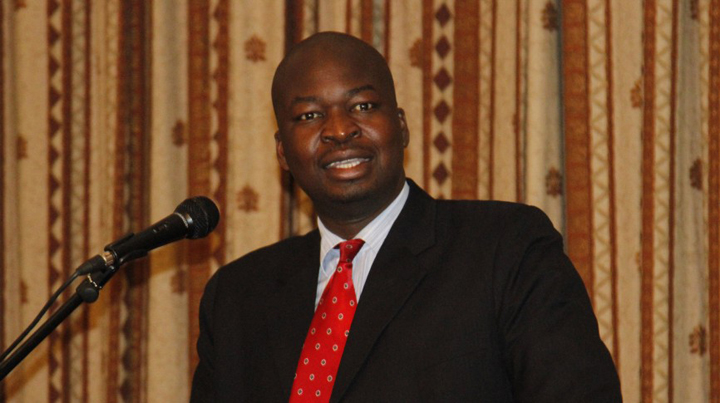
The Permanent Secretary for Finance George Guvamatanga told industrialists today that treasury is tightening the noose on market forces that had created arbitrage opportunities and needs three months from now to contain this vice.
Guvamatanga and his boss Finance Minister Mthuli Ncube are both former bankers and know pretty well how the financial institutions have been capitalising on the distortions.
Guvamatanga is the former managing director of Barclays Bank while Ncube used to own Barbican Bank and was vice-president and chief economist of the African Development Bank.
Ncube announced an $8 billion 2019 budget in which he said Zimbabwe will continue with its multicurrency regime but added that businesses trading in foreign currency will pay their taxes in that currency.
The main opposition Movement for Democratic Change said Ncube’s budget failed “dismally to deal with the question of the currency for use in the country”.
It said the budget “adds more distortions than clarity on the issue”.
“The lack of clarity on currency issue is at the centre of the multi pricing system and a decisive minister ought to bite the bullet and make a decision on the matter,” the party said.
“The minister should have proposed the demonetising of the bond note, reverting to a proper multi-currency regime and outlining a path towards joining the rand monetary union.
“It is clear that there is a foreign currency crisis owing to the unproductive environment arresting Zimbabwean industry as well as exchange and price controls that have resulted in chronic shortages of basics.”
Treasury officials, however, seem to be concentrating on putting up systems to close all loopholes first.
These include biometric registration of all civil servants and linking Zimbabwe Revenue Authority systems to the National Registration Database, Company Registration Database, Deeds Office, Zimbabwe National Statistics Office, National Social Security Authority, Investment Agency and the Zimbabwe Manpower Development Fund and others to ensure accuracy, reliability and traceability of taxpayers.
Treasury is also likely to benefit from the Unexplained Wealth Orders passed under Presidential powers allowing the State to freeze of forfeit property and funds if one cannot explain the source.
(1146 VIEWS)
Zimbabwe has been ranked third among the least free countries in Southern Africa but it…
I had always considered it a curse for a wife to die before her husband.…
This is a true story about the challenges and loneliness I faced when my wife…
My first long-form article in booklet form: Why I had a girlfriend two months after…
The editor and publisher of The Insider, Charles Rukuni, has started a whatsapp channel through…
A friend who knows about my legal battle with Zimbabwe’s richest man, Strive Masiyiwa, way…