The country is relying on taxes as it is still cut off from international financing, though it has signed a few financing deals with private institutions.
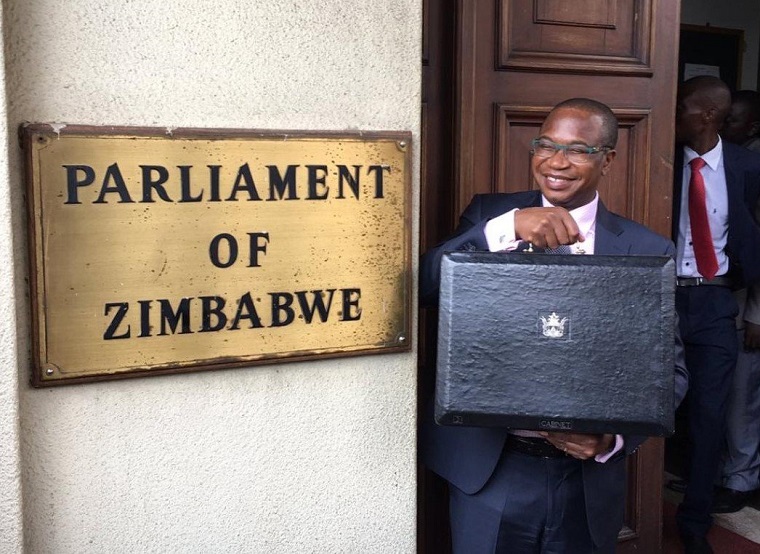
Announcing his budget yesterday, Finance Minister Mthuli Ncube said the value of imported cars more than doubled from $112 million in the first seven months of 2017 to $265 million during the same period this year.
He said it was therefore necessary to charge duty in foreign currency “in order to redirect use of scarce foreign currency to the productive sectors of the economy”.
This would, however, not apply on imports of commercial motor vehicles and vehicles for use by the physically challenged.
While some people have accepted the measure arguing that there are enough cars on sale in the country, they were worried that the government might not realise the revenue it should because of rampant corruption.
Ncube also listed a range of goods whose duty will be in foreign currency and they include foods like cheese, beef, fish, chicken, pasta, vegetables. (Full list below).
He said there would be a transitional mechanism for vehicles and designated goods imported before 22 November but these must be delivered within a maximum of six weeks.
Exemption will be granted on the basis of recommendation by ZIMRA but should be approved by treasury.
Ncube also increased duty on cigarettes from $20 per 1 000 sticks to $25 with effect from 1 December.
The minister said companies trading in foreign currency or using the three tier system will be required to pay all taxes including value added tax in foreign currency because the three tier system implied that they were primarily trading in United States dollars.
“ZIMRA will, among other measures, establish platforms to facilitate information sharing with consumers where payment would have been made through United States Dollars or other currencies, in order to ensure compliance with this policy proposal,” he said.
“Companies that fail to adhere to this measure shall be liable to a penalty equivalent to 100% of the value of turnover on an amended assessment.”
Ncube also increased duty on fuel to stop arbitrage – taking advantage of differences in currencies. Excise duty on diesel and paraffin is going up by 7 cents a litre and petrol by 6.5 cents per litre from 1 December.
The minister said directors of companies that wind-up in suspicious circumstances will be asked to pay the company taxes owing because some people were winding up viable companies to avoid paying tax debts.
Tax debts stood at $4.5 billion at the end of October compared to only $1.19 billion in 2015.
Continued next page
(1202 VIEWS)
This post was last modified on November 23, 2018 8:28 am
Zimbabwe has been ranked third among the least free countries in Southern Africa but it…
I had always considered it a curse for a wife to die before her husband.…
This is a true story about the challenges and loneliness I faced when my wife…
My first long-form article in booklet form: Why I had a girlfriend two months after…
The editor and publisher of The Insider, Charles Rukuni, has started a whatsapp channel through…
A friend who knows about my legal battle with Zimbabwe’s richest man, Strive Masiyiwa, way…