“The next two months will be telling. If we don’t restrain ourselves and continue to increase prices, we will reach a plateau. The levels of inflation and how it has been eroding income of households is so ravaging that the consumers will not continue to sustain their consumer baskets,” Gift Mugano told a joint meeting of the Grain Millers Association of Zimbabwe and retailers.
“So, it is telling to me, that at that point, no retailer or manufacturer will have the capacity to continue. If we reach a plateau, it can result in collapse of industry, retailers and the whole economy.”
According to the Herald, Mugano said there was need for self-regulation to restore sanity in the market.
Prices in Zimbabwe have rocketed since October when the government announced new fiscal policies in line with its transitional stabilisation programme. The central bank also reintroduced foreign currency accounts clearly signalling the end of the 1:1 parity between the United States dollar and the bond note.
Zimbabwe has since liberalised the exchange rate of the greenback and the local currency currently known as the RTGS dollar.
Mugano told millers and retailers: “The efforts being put in place by the retailers and manufacturers are timely and critical and we hope everyone in the value chain involved in the cost build up will exercise restraint in a manner that is reflected in some kind of social contract so that we have order, otherwise we are actually building a time bomb.
“The solution is not an overnight thing; we need to have investments into the country. We need confidence build up because we have money in the Nostro accounts which is enough to reduce the exchange rate if we are trading on foreign currency.
“Government needs to investigate what is causing people who are holding money in their Nostro accounts to not trade it. Private sector should also know that they have a key responsibility to provide solutions in this country.”
The government has accused business of promoting the black market for personal gain arguing that the country now has enough foreign currency to meet its needs.
Finance Minister Mthuli Ncube also accused business of using the US dollar exchange rate to determine prices instead of basing prices on inflation.
Although inflation has soared from 5.4 percent in September to 76 percent in April, month-on-month inflation has been steady though it rose by 5.5 percent from March to April.
Efforts by the central bank to close on the parallel market have so far been in vain.
According to Market Watch, the US dollar is today pegged at 9.68 on the OMIR, 7.95 to the RTGS, 7.75 to the bond note and 5.51 on the interbank market.
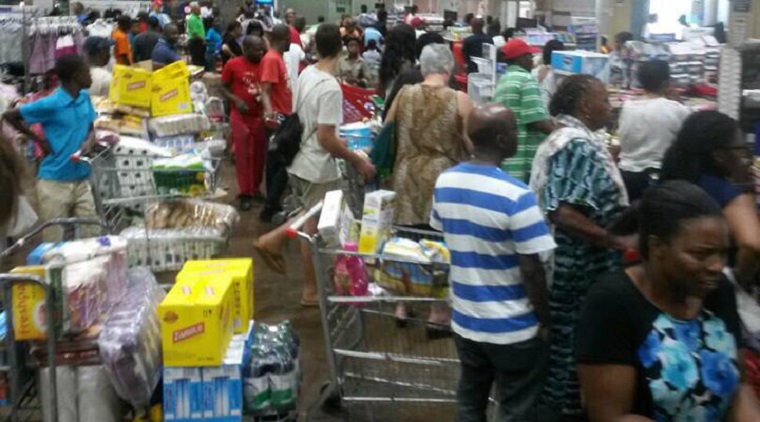
While Mugano’s theory makes a lot of common sense, one commentator noted that the problem with Zimbabwean consumers is that when prices rise they go into panic buying instead of boycotting.
Shops are, therefore, likely to close more because people can no longer afford the prices rather than boycotting.
(178 VIEWS)
This post was last modified on June 4, 2019 10:25 am
Four of the world’s largest banks are all in China. Assets of the Industrial and…
Zimbabwe is one of the 27 countries in the world where the richest 0.1% of…
Zimbabwe has been ranked third among the least free countries in Southern Africa but it…
I had always considered it a curse for a wife to die before her husband.…
This is a true story about the challenges and loneliness I faced when my wife…
My first long-form article in booklet form: Why I had a girlfriend two months after…