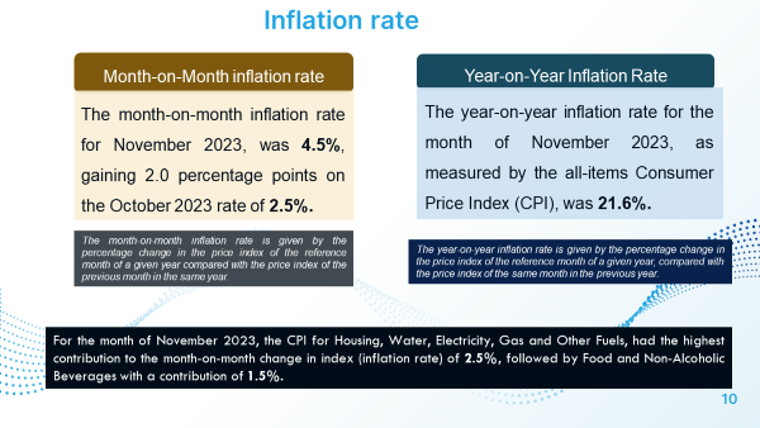
Annual inflation went up from 17.8% in October to 21.6% while month-on-month inflation rose from 2.5% to 4.5%.
Zimbabwe is battling to maintain currency stability and has allowed the use of multiple currencies until 2030, a move that is likely to lead to more reliance on the United States dollar which now accounts for more than 80% of the transactions in the country.
Business is, however, quite aware that increased use of the US dollar is going to make it less competitive.
Reserve Bank of Zimbabwe governor John Mangudya has advocated for the creation of super demand for the local currency by compelling business to pay some taxes in local currency.
The central bank is also working on a de-dollarization roadmap to provide forward guidance to economic agents and markets to enhance certainty and predictability in domestic transactions.
(141 VIEWS)
This post was last modified on November 27, 2023 5:04 pm
Zimbabwe has been ranked third among the least free countries in Southern Africa but it…
I had always considered it a curse for a wife to die before her husband.…
This is a true story about the challenges and loneliness I faced when my wife…
My first long-form article in booklet form: Why I had a girlfriend two months after…
The editor and publisher of The Insider, Charles Rukuni, has started a whatsapp channel through…
A friend who knows about my legal battle with Zimbabwe’s richest man, Strive Masiyiwa, way…