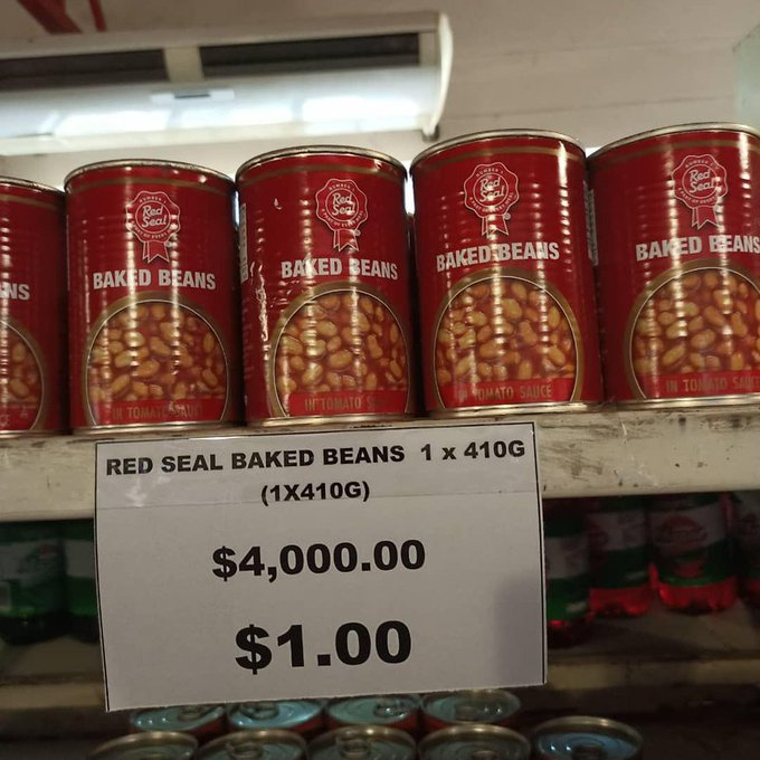
Last week, Cabinet announced that it would conduct an inquiry into why prices are raging – saying it needed an “evidence-based” approach to the crisis. The study was undertaken by government agencies, which include the Competition and Tariff Commission, the National Competitiveness Commission and the Consumer Protection Commission.
The team has spent the week speaking to businesses and consumers, and their verdict is out: government is driving money supply, and it needs to free the exchange rate. As for the decision to lift duty on basic goods imports, this will only destroy Zimbabwean industries and reverse the growth of local brands, which have come to dominate store shelves.
Here are key takes from the report:
On the exchange rate
“Liberalise the exchange rate to allow market forces to determine prices and attain efficiency,” the report says. “This measure is unlikely to lead to increases in prices as manufacturers’ prices are pegged in US$ and indexed to the parallel market.”
The survey found that the exchange rate is the biggest cause of the price hikes, with manufacturers preferring USD payments because they do not see the local currency holding value.
Who is driving money supply?
The report points to payments from the Government to contractors, and central bank’s payment of the Zimdollar component of surrender requirements for exporters, as a source of money supply growth.
“Government should carefully manage large payments to contractors to avoid surges in local currency liquidity,” says the report.
On RBZ, the report recommends that the bank more closely monitors all sources of money supply growth to contain exchange rate movements.
“Properly fund the RBZ to purchase export surrender which appears to be a major driver of money supply growth. All surrender purchases must be done in a money supply-neutral manner. We recommend that the Ministry of Finance and Economic Development publishes the amount that will be allocated to the Reserve Bank for this purpose and how this will be raised by the Ministry.”
Currently, exporters keep 75% of their export earnings in USD, and 25% is paid in Zimdollars. Last week, government dropped a requirement for 15% of any local USD deposits to be paid out in Zimdollars, a measure that had forced RBZ to print Zimdollars to pay for that component.
Continued next page
(318 VIEWS)
This post was last modified on May 23, 2023 2:21 pm
Zimbabwe has been ranked third among the least free countries in Southern Africa but it…
I had always considered it a curse for a wife to die before her husband.…
This is a true story about the challenges and loneliness I faced when my wife…
My first long-form article in booklet form: Why I had a girlfriend two months after…
The editor and publisher of The Insider, Charles Rukuni, has started a whatsapp channel through…
A friend who knows about my legal battle with Zimbabwe’s richest man, Strive Masiyiwa, way…