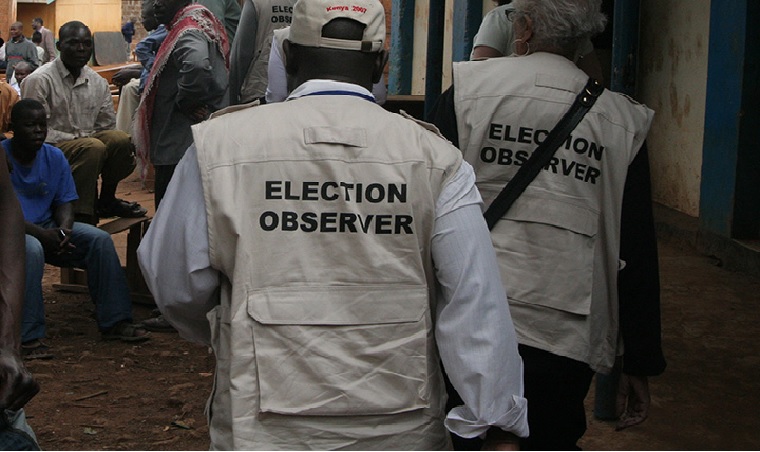
While Zimbabwe’s past three elections were marred by allegations of rigging, violence and intimidation, new President Emmerson Mnangagwa has welcomed the return of monitors from Western nations whose governments were more critical of Mugabe than their African counterparts.
He’s vowed that the July 30 vote will be free and fair – a key to start rebuilding the southern African nation’s reputation and an economy battered by years of misrule.
“It’s good there are observers from outside Africa this time,” said George Rusere, an unemployed 23-year-old in the northern town of Guruve.
“In the past, only African nations or countries friendly with Mugabe were allowed, and they whitewashed election after election to keep their friend in power. Maybe this time it’ll be different.”
Election violence peaked in 2008 when about 200 people were killed. The main opposition Movement for Democratic Change and civil rights groups have routinely accused the ruling Zimbabwe African National Union-Patriotic Front party of using a politically biased police force and military to limit their access to voters in its traditional support base in the rural areas and using force to suppress dissent.
This year the MDC has been able to campaign in rural areas for the first time since its formation in 1999, drawing large crowds to rallies. Yet it remains suspicious about the government’s commitment to a free vote and Western monitors’ ability to guarantee one.
The opposition says the voters’ roll is inaccurate and the printing of ballot papers is mired in secrecy. Voter education remains largely in government hands, and an attempt by legal rights group Veritas to challenge the status quo failed when the High Court refused to hear its suit because it said it was presented improperly.
“We’re still deeply concerned about serious breaches of our electoral laws and the constitution,” the MDC’s leader, Nelson Chamisa, said in an interview in Harare, the capital. “ZANU-PF, the Zimbabwe Electoral Commission or the international community can’t just dismiss a patently unfair process.”
The European Union, along with Norway, Switzerland and Canada, is deploying about 140 observers, and the Washington-based International Republican Institute and the National Democratic Institute are sending a joint team of more than 30 monitors.
The African Union is dispatching 54 observers, while the Commonwealth, an association of mainly former British colonies, and the Southern African Development Community, a regional group, are expected to send their own teams.
Continued next page
(265 VIEWS)
Page: 1 2
Zimbabwe has been ranked third among the least free countries in Southern Africa but it…
I had always considered it a curse for a wife to die before her husband.…
This is a true story about the challenges and loneliness I faced when my wife…
My first long-form article in booklet form: Why I had a girlfriend two months after…
The editor and publisher of The Insider, Charles Rukuni, has started a whatsapp channel through…
A friend who knows about my legal battle with Zimbabwe’s richest man, Strive Masiyiwa, way…