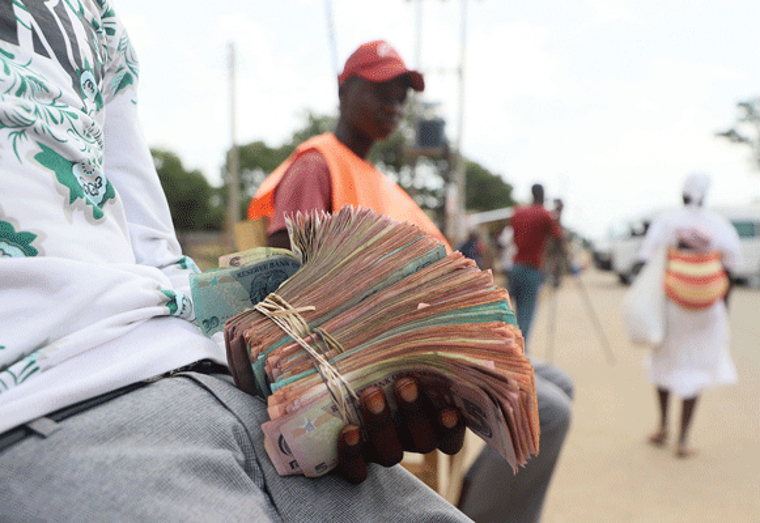
With an anticipated drop in mineral earnings this year and a bigger import bill due to the drought, demand for the USD will likely get stronger, adding more pressure on the embattled local unit.
The Zimbabwe dollar traded at $8 240 per US dollar on Thursday, down from $6 467 earlier this week, according to central bank data.
This week’s drop means that the official rate is now more than 91% down over the past year on both the official and black markets. The Zimdollar started 2023 at $705 to the USD on the official market and around Z$1 000 at the black market.
Authorities are trying to narrow a widening gap between the formal rate and the more widely used black market rate.
The acceleration in the weakening of the Zimbabwe dollar is because of high demand for the US dollar, a member of central bank’s monetary committee has been quoted as saying.
Authorities see a gap of 10% to 20% between the official and unofficial exchange rates as acceptable, Bloomberg reported, citing Persistence Gwanyanya, a member of RBZ’s monetary policy committee.
He blames the drop in the Zimdollar on the end of tobacco sales and a softening of global commodity prices, which have slowed US dollar inflows into the economy.
“Even this quarter, our situation will not have got to normal,” he said. “We will need to manage the demand side, that is deal with the demand for forex and judiciously allocate resources.”
With the recent depreciation, the “equilibrium has been disturbed” as the gap between official and unofficial markets exceeds the 10% to 20% range set by authorities, said Gwanyanya. “We will now be seized with re-establishing the equilibrium,” he said.
The Zimdollar’s troubles are feeding into inflation and making conditions tougher for businesses. Because they are forced to use the formal exchange rate, businesses are taking on bigger exchange rate losses. The exchange rate has seen consumers abandon supermarkets for informal retailers, where US dollar prices are lower.
Currently, businesses are compelled to charge prices within a 10% margin of the official exchange rate.
In a policy paper to the government, the Confederation of Zimbabwe Industries proposed that they be allowed to set prices at 20% below the market exchange rate.-NewZWire
(154 VIEWS)
This post was last modified on January 11, 2024 6:33 pm
Zimbabwe is one of the 27 countries in the world where the richest 0.1% of…
Zimbabwe has been ranked third among the least free countries in Southern Africa but it…
I had always considered it a curse for a wife to die before her husband.…
This is a true story about the challenges and loneliness I faced when my wife…
My first long-form article in booklet form: Why I had a girlfriend two months after…
The editor and publisher of The Insider, Charles Rukuni, has started a whatsapp channel through…