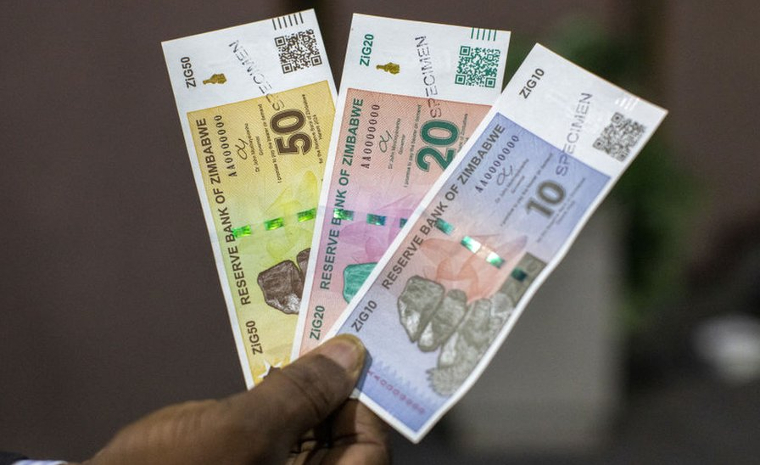
The currency launched on 5 April has been met with some scepticism largely because of the history of failed currencies Zimbabwe has introduced since the West imposed sanctions on the country at the turn of the century.
It kicked off trading at 13.5616 on 8 April and rose to a high of 13.2517 on 24 April before plunging to a low of 13.6757 on 6 May.
Despite the scepticism it has held its ground trading within the 13:1 range.
New central bank governor John Mushayavanhu says there will be a scramble for the local currency next month when quarterly tax payments are due as there are only US$80 million worth of ZiG in circulation when taxes amount to US$300 million.
The government wants half the taxes to be paid in local currency which means US$150 million will have to be in ZiG.
Mushayavanhu says the central bank does not want to create ZiG for the local market but companies must earn their own ZiG by selling their products in local currency.
His aim is to reduce the current ratio of transactions from 85:15 in favour of the United States dollar to 70:30 by the end of this year.
He wants this to further improve to 60:40 by the end of next year and to 50:50 by 2026.
Mushayavanhu says once the country reaches 50:50 there is no longer any need to worry about the exchange rate as there will now be confidence in the local currency.
(1098 VIEWS)
Zimbabwe is one of the 27 countries in the world where the richest 0.1% of…
Zimbabwe has been ranked third among the least free countries in Southern Africa but it…
I had always considered it a curse for a wife to die before her husband.…
This is a true story about the challenges and loneliness I faced when my wife…
My first long-form article in booklet form: Why I had a girlfriend two months after…
The editor and publisher of The Insider, Charles Rukuni, has started a whatsapp channel through…