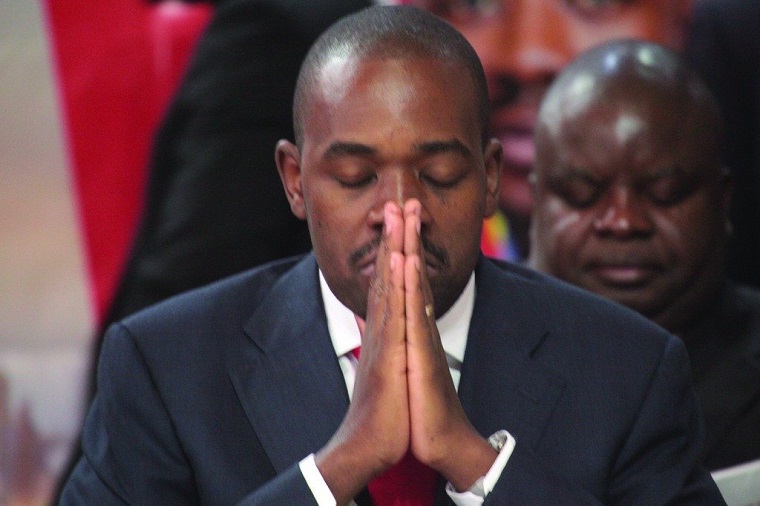
In a country where national institutions – including the judiciary – are perceived to be conflated with ruling party interests, many in the opposition’s rank and file see the Zimbabwe African National Union – Patriotic Front (ZANU-PF) behind this ruling, pulling the rug from beneath Chamisa’s feet.
With a limping Chamisa, there is effectively no opposition to talk about as most other candidates who contested the 2018 elections have been co-opted into the Political Actors Dialogue. This platform was created by President Emmerson Mnangagwa but rejected by Chamisa.
The Supreme Court issued a ruling on 31 March – a day after the 21-day national lockdown to slow the spread of COVID-19 began. The decision went the way of former MDC deputy president Thokozani Khupe.
Chamisa led the MDC-Alliance, a grouping of opposition factions, in the 2018 elections and was beaten by Mnangagwa who escaped a run-off by a whisker. Khupe led a smaller faction and got just over 45 500 votes.
The ruling has further fractured the opposition, casting doubt over its credibility as an alternative to ZANU-PF.
It is unfathomable that Khupe, who couldn’t garner even 50 000 votes in the 2018 elections, has any political clout and can rally Zimbabweans against ZANU-PF. Meanwhile the MDC-Alliance maintains it is unmoved by the court ruling and Chamisa has so far been conspicuous by his silence.
The wrangling over who should lead the party ensued after MDC founder Morgan Tsvangirai died in February 2018. Just before his death, Tsvangirai controversially appointed two vice presidents, Chamisa and Elias Mudzuri, in addition to Khupe who was elected to this position during the party’s 2014 Congress.
The move was viewed as political exigency to balance out factional succession fights within the MDC-T, the main MDC grouping led by Tsvangirai at the time. It also sowed the seeds of the party’s split.
Even the most loyal MDC-T supporters have been at pains to explain the constitutionality of Tsvangirai’s last-minute decision to appoint Chamisa and Madzuri.
The political imperatives for the move were clear, however. In his 2018 New Year’s address to the nation Tsvangirai revealed his desire to have the party’s young people take up more positions of responsibility and define the course of the party.
Continued next page
(305 VIEWS)
Page: 1 2
A friend who knows about my legal battle with Zimbabwe’s richest man, Strive Masiyiwa, way…
Britain says amendment of the Zimbabwe constitution is a sovereign, legislative matter for Zimbabwe to…
It is now 47 years since I wrote the short story below for a South…
Zimbabwe has released its 2026 monetary policy statement in which it seeks to stabilise its…
Far from it, on paper that is. Ignatius Chombo was one of the longest serving…
Zimbabwe on Thursday announced a ZiG290.9 billion budget with revenue expected to be ZiG287.6 billion,…