There was an outcry that central bank governor John Mangudya had jumped the gun by imposing the fixed exchange rate, barely two weeks after Finance Minister Mthuli Ncube had introduced a managed floating rate, but this was not reversed.
The interbank rate which was at 18:1 when Ncube made his announcement had fallen to 28:1 when Mangudya brought it back to 25:1. The blackmarket rate was around 40:1.
Mangudya said the fixed exchange rate was brought back “to provide for greater certainty in the pricing of goods and services in the economy” but this never happened.
He also said that the measure will be reviewed when markets stabilise from the effects of COVID-19 which sees a long way off.
Although the blackmarket rate softened for just a few days when the country introduced the national lockdown on 30 March it has since skyrocketed and was between 56 to 63:1 yesterday according to Marketwatch.
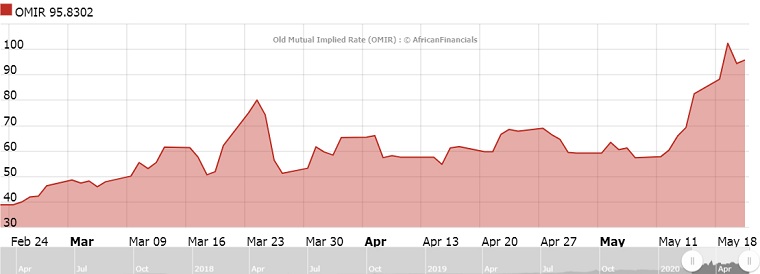
The Old Mutual Implied Rate, which measures investor sentiment, was at 96 to 1 after having fallen to a staggering 102:1 on Tuesday.
With the official rate at 25:1, one wonders who is benefitting from this exchange rate?
Has this not opened more room for arbitrage as those with access to the cheap money from the central bank can make more money from burning that money than they can ever make in any other form of trading?
(128 VIEWS)
This post was last modified on May 22, 2020 6:16 am
Zimbabwe has been ranked third among the least free countries in Southern Africa but it…
I had always considered it a curse for a wife to die before her husband.…
This is a true story about the challenges and loneliness I faced when my wife…
My first long-form article in booklet form: Why I had a girlfriend two months after…
The editor and publisher of The Insider, Charles Rukuni, has started a whatsapp channel through…
A friend who knows about my legal battle with Zimbabwe’s richest man, Strive Masiyiwa, way…