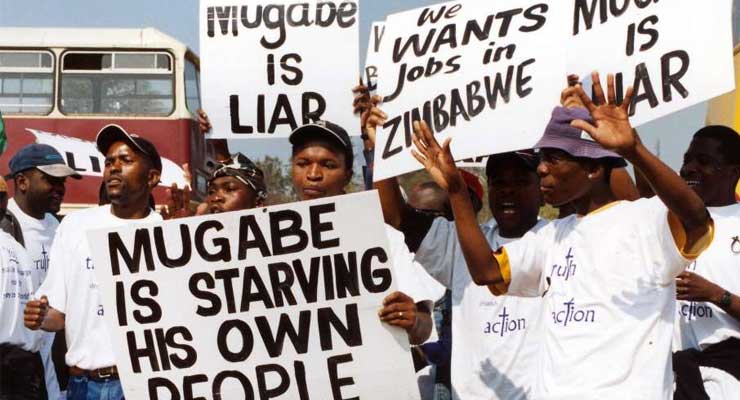
Over the last few months a new type of politics has been brewing in Zimbabwe. Fed up with the mainstream parties, people have been taking to social media to express their demands. The most prominent has been the #ThisFlag movement, adopting the national flag as the symbol to rally around.
Led by a pastor – Evan Mawarire – it has generated massive interest, both in Zimbabwe and in the diaspora, and resulted in a successful stay-away in early July. Other movements, linked by social media, include: Occupy Africa Unity Square and Tajamuka/Sesjikile, as well as numerous bloggers, Twitter commentators, Youtube channels and Facebook accounts. Will this make a difference?
Some say this is the start of a ‘Zimbabwean spring’, echoing the movements that toppled governments in the Arab world a few years ago. But we need to be cautious about such parallels. There have been some excellent, reflective commentaries on this emerging phenomenon from Alex Magaisa, Miles Tendi and Brian Raftopolous in recent weeks. Rather than repeat what they say, let me highlight some key points made.
Corruption, repression and lack of economic opportunity certainly are real concerns in Zimbabwe today, particularly among youth and urbanites. The riots discussed last week were an expression of this among vendors, taxi operators and others working hard to make a living in the ‘informal economy’.
On Twitter, the core demands are stated, thus: "#ThisFlag will continue to be a civil rights movement driven by its citizens against: Poverty, Injustice, Corruption". Most would sign up to this. But how does it translate into a political project, beyond the demands? This requires reaching out to wider constituencies.
Only 34 percent of Zimbabwe’s population is classified as urban by the World Bank. This is far less than say Tunisia where the Arab spring started, where 68 percent is urban. This makes a big difference, as Twitter, Facebook and other social media are not active in many rural areas. People are of course engaging through multiple routes, and Whatsapp connections reach further. But most activists live in the major towns and are young, and hashtag activism doesn’t reach older generations, or people in rural areas where the majority live.
Rural people certainly have grievances against the government, but they are different. Many got land during the land reform, but they want state support to help make their farms productive and their rural economies grow. These are different demands, and different people; coalitions across the whole electorate will be vital in any future election. ZANU-PF, by both fair and foul means, have been past masters at assuring a vote.
Continued next page
(216 VIEWS)
This post was last modified on July 18, 2016 7:11 am
Zimbabwe has been ranked third among the least free countries in Southern Africa but it…
I had always considered it a curse for a wife to die before her husband.…
This is a true story about the challenges and loneliness I faced when my wife…
My first long-form article in booklet form: Why I had a girlfriend two months after…
The editor and publisher of The Insider, Charles Rukuni, has started a whatsapp channel through…
A friend who knows about my legal battle with Zimbabwe’s richest man, Strive Masiyiwa, way…