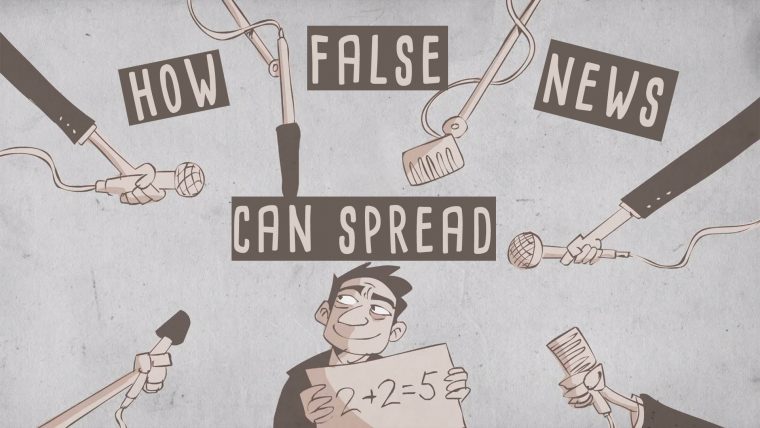
Most media organisations, including this one, have turned to social media to promote their stories and publications, but according to James Breiner “on social media, feelings are more important than facts”.
There have been reports that United States president-elect Donald Trump won the recent elections because of the social media, especially fake news stories. Fake news was so powerful that one writer could not even reverse his own lie.
Zimbabwe has its own fair share of blogs that publish fake stories. How powerful are these sites and how much influence do they have on the people?
Read the story below, taken from News Entrepreneurs blog, to judge for yourself.
Traditional news organizations made a deal with the devil when they turned to social media and search-engine optimization to gain digital audience and revenue.
They recruited "community managers" to raise their profile on Facebook, Twitter, Instagram, and the like. They tagged their articles to raise them in search results.
The devilish side of the deal was that presumably ethical news media were trying to sell credibility and verified information — facts — within a turbulent ocean of emotion.
On social media, feelings are more important than facts. People want to declare who they are and what they believe. So they "like" and share stuff that reinforces their view of who they are and what they agree with. Emotions predominate over facts.
Articles that are popular, shared, and linked to will rise to the top of search results in Google and other search engines. It's easy to share or like something that reinforces your view of who you are.
So the post-election idea now being championed by many journalists that Facebook and other social media should be fact-checked, and that fake news stories could be eliminated from social media shows they misunderstand the new media dynamics.
Craig Silverman, an investigative journalist who specializes in how to verify information on the Internet, wrote how fake news outperformed real news on Facebook during the last three months of the election campaign. Mainstream media were less relevant in the social sphere.
To his point: The momentum of a false news story about anti-Trump protesters that began on Twitter and attracted hundreds of thousands of likes, shares, etc. was not slowed down at all by several articles that showed it was clearly false. Even the original author, who realized he was mistaken, couldn't slow it down when he posted a big red "FALSE" on his original tweet.
Continued next page
(276 VIEWS)
This post was last modified on November 24, 2016 8:30 am
Zimbabwe has been ranked third among the least free countries in Southern Africa but it…
I had always considered it a curse for a wife to die before her husband.…
This is a true story about the challenges and loneliness I faced when my wife…
My first long-form article in booklet form: Why I had a girlfriend two months after…
The editor and publisher of The Insider, Charles Rukuni, has started a whatsapp channel through…
A friend who knows about my legal battle with Zimbabwe’s richest man, Strive Masiyiwa, way…