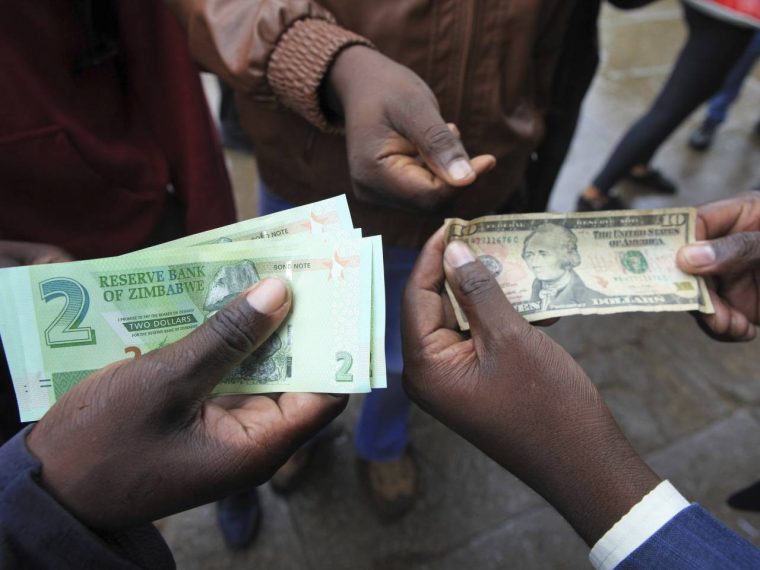
According to the central bank governor John Mangudya, the bond notes will remain in use until the government announces a replacement local currency for the Zimbabwe dollar, which was demonetised in 2015.
This means that investors who fear a possible loss of value under the current muddled currency regime will be looking for alternatives that do not only preserve value but provide a return that translates into hard currency.
Finance minister Patrick Chinamasa has forecast an economic growth rate of 1.7 percent for the year, but the International Monetary Fund says in the absence of reforms and new funding, the economy is likely to contract by a negative 2.5 percent.
The southern African country has high levels of unemployment, a collapsing industry and an acute banknote shortage.
The IMF said in its World Economic Outlook for October 2016, Zimbabwe would register a negative 0.3 percent growth for 2016, its first gross domestic product contraction since 2008, when the economy shrank by 16.5 percent at the height of a hyperinflation crisis.
Zimbabwe has been in deflation since December 2014, a trend seen persisting throughout this year. The number of investments that add value has also shrunk. We look at the options below.
Continued next page
(465 VIEWS)
This post was last modified on January 9, 2017 6:31 pm
A friend who knows about my legal battle with Zimbabwe’s richest man, Strive Masiyiwa, way…
Britain says amendment of the Zimbabwe constitution is a sovereign, legislative matter for Zimbabwe to…
It is now 47 years since I wrote the short story below for a South…
Zimbabwe has released its 2026 monetary policy statement in which it seeks to stabilise its…
Far from it, on paper that is. Ignatius Chombo was one of the longest serving…
Zimbabwe on Thursday announced a ZiG290.9 billion budget with revenue expected to be ZiG287.6 billion,…