Competition for control of other people’s lands led to repeated wars between the colonising nations. New doctrines – racial categorisation, ethnic superiority and a moral duty to “rescue” other people from their “barbarism” and “depravity” – were developed to justify the violence. These doctrines led, in turn, to genocide.
The stolen labour, land and goods were used by some European nations to stoke their industrial revolutions. To handle the greatly increased scope and scale of transactions, new financial systems were established that eventually came to dominate their own economies. European elites permitted just enough of the looted wealth to trickle down to their labour forces to seek to stave off revolution – successfully in Britain, unsuccessfully elsewhere.
At length, the impact of repeated wars, coupled with insurrections by colonised peoples, forced the rich nations to leave most of the lands they had seized, formally at least. These territories sought to establish themselves as independent nations. But their independence was never more than partial. Using international debt, structural adjustment, coups, corruption (assisted by offshore tax havens and secrecy regimes), transfer pricing and other clever instruments, the rich nations continued to loot the poor, often through the proxy governments they installed and armed.
Unwittingly at first, then with the full knowledge of the perpetrators, the industrial revolutions released waste products into the Earth’s systems. At first, the most extreme impacts were felt in the rich nations, whose urban air and rivers were poisoned, shortening the lives of the poor. The wealthy removed themselves to places they had not trashed. Later, the rich countries discovered they no longer needed smokestack industries: through finance and subsidiaries, they could harvest the wealth manufactured by dirty business overseas.
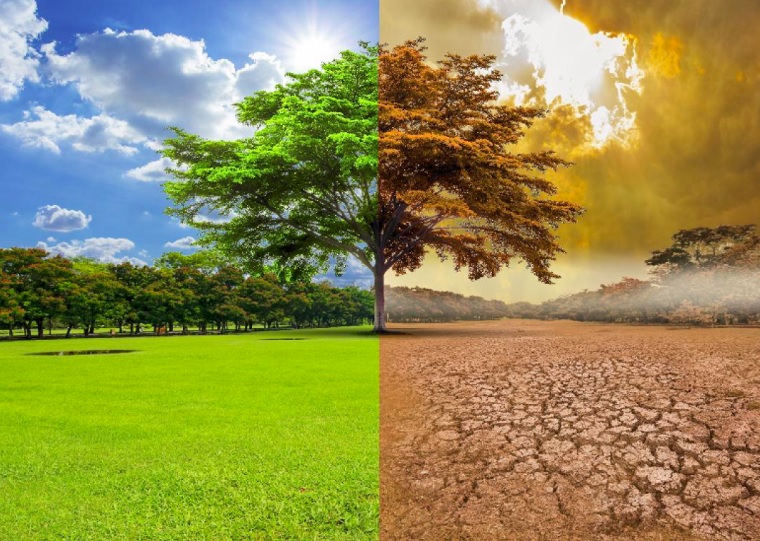
Some of the pollutants were both invisible and global. Among them was carbon dioxide, which did not disperse but accumulated in the atmosphere. Partly because most rich nations are temperate, and partly because of extreme poverty in the former colonies caused by centuries of looting, the effects of carbon dioxide and other greenhouse gases are felt most by those who have benefited least from their production. If the talks in Glasgow are not to be experienced as yet another variety of oppression, climate justice should be at their heart.
The wealthy nations, always keen to position themselves as saviours, have promised to help their former colonies adjust to the chaos they have caused. Since 2009, these rich countries have pledged $100bn (£75bn) a year to poorer ones in the form of climate finance. Even if this money had materialised, it would have been a miserly token. By comparison, since 2015, the G20 nations have spent $3.3tn on subsidising their fossil fuel industries. Needless to say, they have failed to keep their wretched promise.
Continued next page
(197 VIEWS)
This post was last modified on November 10, 2021 9:10 am
Page: 1 2
Zimbabwe has been ranked third among the least free countries in Southern Africa but it…
I had always considered it a curse for a wife to die before her husband.…
This is a true story about the challenges and loneliness I faced when my wife…
My first long-form article in booklet form: Why I had a girlfriend two months after…
The editor and publisher of The Insider, Charles Rukuni, has started a whatsapp channel through…
A friend who knows about my legal battle with Zimbabwe’s richest man, Strive Masiyiwa, way…