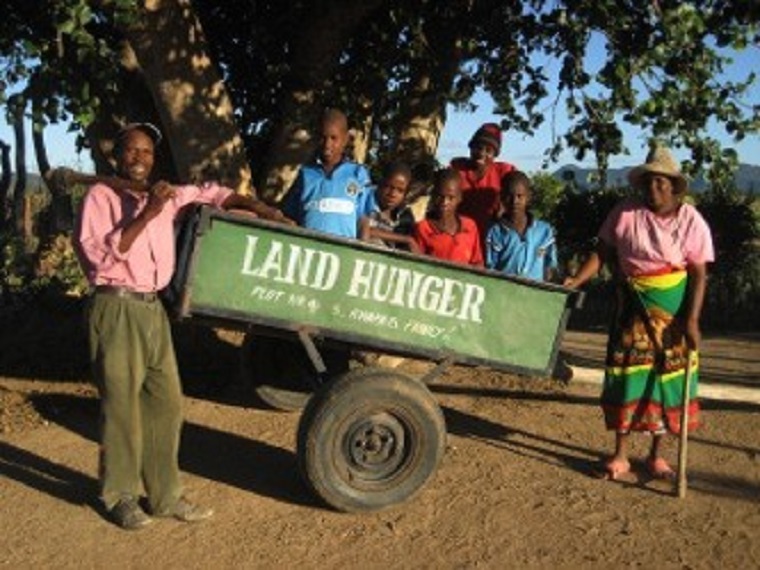
Zimbabweans have urged the government to set up an executive Land Commission which will work independently without any unnecessary influence from the government or anybody else.
Traditional leaders should be consulted in the land allocations and in dispute resolution.
The right to land of vulnerable groups such as women, orphans, the elderly and the disabled should be respected in line with the Constitution and other legal instruments.
They said corrupt land officers, some of whom were reportedly charging people up to $7 000 for land, should be removed from the system, instead of being transferred to other provinces because this does not solve the problem.
The principle of 'one-person, one-farm' should be implemented through a state of the art database, with software that can detect multiple ownership.
They said previous white farmers need to be compensated for the improvements made on the farms so that the new owners can source investment and become productive. Therefore the government should set an allocation for the compensation of improvements on farms previously owned by white farmers.
Here is the full contribution of the chairman of the Lands Committee Christopher Chitindi
HON. CHITINDI: Thank you Madam Speaker.
1. Introduction
Agricultural land is crucial resource in Zimbabwe given that the economy is agro-based. Approximately 70% of the population lives in rural areas and the majority derive their livelihoods and income from farming, livestock production and related activities. In Africa, 60% of the population is heavily dependent on agriculture and related activities. In the process, several continental conflicts and wars have been raging over the access and control of land and natural resources. Even in Zimbabwe, the select Committees on Lands, Agriculture, Mechanisation and Irrigation Development and that of Peace and Security observed during public consultations that the land question remains a very emotive one. Since 1980, several land policies have been enacted to address the land question and another opportunity has availed itself for the Eighth Parliament to enact a law, which seeks to address challenges being faced by farmers particularly, beneficiaries of the fast-track reform process that began in 2000. Once these issues are addressed, it will go a long way in improving productivity, competitiveness and food security in the agricultural sector.
Continued next page
(386 VIEWS)
This post was last modified on November 19, 2016 1:57 pm
Four of the world’s largest banks are all in China. Assets of the Industrial and…
Zimbabwe is one of the 27 countries in the world where the richest 0.1% of…
Zimbabwe has been ranked third among the least free countries in Southern Africa but it…
I had always considered it a curse for a wife to die before her husband.…
This is a true story about the challenges and loneliness I faced when my wife…
My first long-form article in booklet form: Why I had a girlfriend two months after…