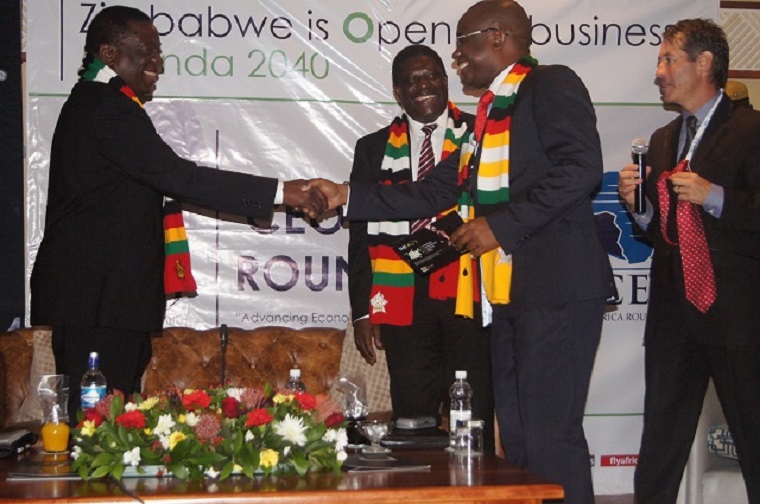
From a crusading hero feted on the streets of Harare just over six months ago, Zimbabwe’s President Emmerson Mnangagwa is now becoming known as a man of excuses.
His early promises to improve people’s lives have not materialised.
Boastful announcements about $11bn in investment pledges have been questioned by the trade unions and others, while striking nurses, who have worked in deplorable conditions for years, were fired for standing up to the government.
Cash-strapped businesses are still shedding jobs as the debilitating liquidity crisis and acute foreign currency shortages from the era of former President Robert Mugabe continue.
Meanwhile, election campaigning has gone into full gear for a poll expected to be held before August 21 — less than three months away.
Huge banners of Mnangagwa have appeared around Harare, punting him as Zimbabwe’s next leader.
He took a short break from extensive international travel to release the ruling party’s election manifesto at the weekend, promising, again, to make Zimbabwe great again.
Admittedly, he has not had long to do much of substance.
His focus has been on international re-engagement and securing investment, a priority a long way from the daily grind experienced by most voters without money, jobs or prospects.
People are sceptical about the ability of his governing ZANU-PF party, a known refuge for scoundrels, to reform even if the president proves to be genuine about wanting to do so.
The party was defined by two main factions over the past few years, headed by Mnangagwa and Grace Mugabe, but other divisions are now beginning to show.
One is the growing tension between the military and civilian factions within the top echelons of both party and state.
Soldiers who moved into the government through Mnangagwa are reportedly trying to exercise undue influence over him and other civilians in the government.
Under Mugabe, military chiefs enjoyed significant power, patronage and influence and are now in an even stronger position after helping Mnangagwa rid Zimbabwe of its ageing leader.
Many have large commercial interests they need to protect. Their appointment to top posts in the interim government is not, as many thought, likely to be just a thank you from the president until the real work begins; they will not go quietly.
But a quasi-military government is not what Zimbabweans envisaged when they celebrated soldiers on the streets in the immediate aftermath of Mugabe’s removal, and the ascendancy of soldiers may cost the party votes.
Continued next page
(2207 VIEWS)
At least four million people in Zimbabwe reported that they had gone without food on…
Four of the world’s largest banks are all in China. Assets of the Industrial and…
Zimbabwe is one of the 27 countries in the world where the richest 0.1% of…
Zimbabwe has been ranked third among the least free countries in Southern Africa but it…
I had always considered it a curse for a wife to die before her husband.…
This is a true story about the challenges and loneliness I faced when my wife…