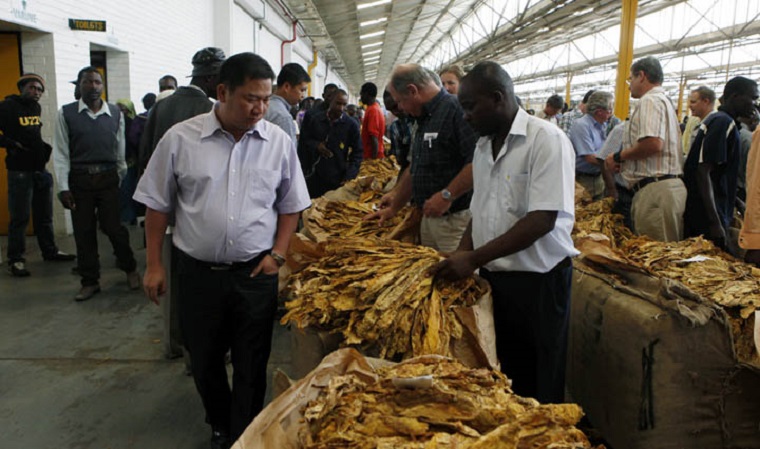
Anyone who has worked in the tobacco industry will testify that buying and selling the golden leaf is a notoriously painstaking exercise where every bit of leaf that goes through the auction system is checked and re-checked, mostly for inadequate moisture and moulds.
It is a process that has left 50-year-old Tapfumaneyi Shava, a tobacco farmer from Trelawney area in Banket, Mashonaland West province, in a pickle.
He shakes his head in disbelief as he heads for the exit gate at Harare’s Premier Tobacco Auction Floors after being informed that part of his crop is not of a good enough quality.
In fact, a total of 10 bales have fallen foul of the stringent tobacco grading systems, leaving Tapfumaneyi with two alternatives: he either has to regrade the tobacco or pay professionals to do it for him.
Wiping his brow and trying hard to put on a brave face, a dejected Tapfumaneyi, a father of three, says: “I have no choice but to pay for commercial re-handling because if I do it myself, they will find other defects. I have spent three days here waiting to sell my tobacco but now I am being told that some of my bales have been rejected. I still have to wait for some days to get cash from the bank.”
Tapfumaneyi’s dilemma is not an isolated incident but evidence of a growing crisis in the industry.
A staggering 139 502 bales have been rejected at point of sale across the three main auction floors and several contract sales floors in the capital as of Tuesday this week.
Overweight bales and mixing different grades in one bale are some of the reasons why farmers come to grief at the auction floors.
Ethical Leaf Tobacco (ELT) founder David Machingaidze said tobacco rejection affects farmers more than contractors.
“The effect of bale rejection for us as contractors is insignificant because in most cases it’s the farmer who refuses a sale because of the price. At the end of the day, bale rejection is an inconvenience for the farmer who has to re-handle, bale and rebook for sale the next day.
“If a bale needs to be re-handled, here at ELT floors for instance, there are a couple of commercial re-handlers who provide that service to the growers but it comes at a cost of between 20 cents to 25 cents per kilogramme.”
He added a word of caution for farmers who may be tempted to do things on the cheap: “There are unlicensed re-handlers as well who operate just outside our premises but some of them dupe farmers by stealing some of their tobacco.”
Continued next page
(208 VIEWS)
This post was last modified on July 15, 2017 7:07 pm
Page: 1 2
Zimbabwe has been ranked third among the least free countries in Southern Africa but it…
I had always considered it a curse for a wife to die before her husband.…
This is a true story about the challenges and loneliness I faced when my wife…
My first long-form article in booklet form: Why I had a girlfriend two months after…
The editor and publisher of The Insider, Charles Rukuni, has started a whatsapp channel through…
A friend who knows about my legal battle with Zimbabwe’s richest man, Strive Masiyiwa, way…