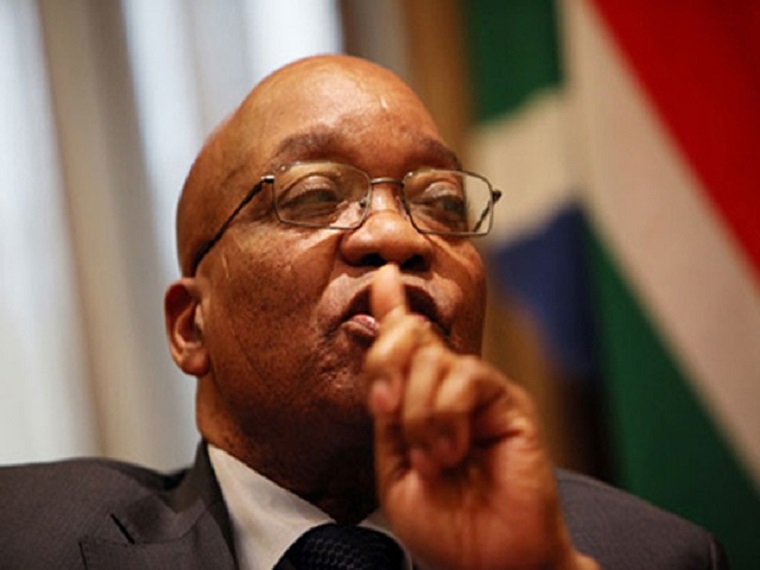
There was a time that South Africa looked very different to the rest of Africa.
The “rainbow nation” was seen by many – including a lot of its own citizens – to be exceptional, having more in common with the developed states of Europe than some of the countries on its own doorstep.
But, in the wake of a series of destabilising corruption scandals, financial mismanagement and the incompetent leadership of President Jacob Zuma, this is no longer the case.
It’s time therefore to look to the rest of the continent for evidence on how the crisis within the country’s ruling African National Congress (ANC) is likely to unfold.
The notion of South African exceptionalism runs deep.
Having suffered white minority rule much longer than most other African states, the country had one of the most stable and successful transitions to democracy on the continent.
Following the election of the ANC in 1994, Nelson Mandela’s government promoted tolerance and responsible government.
At that point, South Africa did not look very “African”.
While Nigeria was blighted by endemic corruption, the ANC was led by a man whose reputation was beyond reproach.
When the ZANU-PF government was becoming increasingly brutal in Zimbabwe, Mandela’s administration was promoting the rule of law and inclusion.
And just as the Democratic Republic of Congo, Rwanda and Somalia were falling apart, the South African state appeared to be growing stronger.
Moreover, the notion of exceptionalism wasn’t just something dreamt up by academics or reporters: it was also deeply felt by South Africans themselves.
Some surveys have found that many believe that they are exceptional, and in some cases that they are superior to the rest of the continent.
This had some positive consequences, most notably by supporting the reconstruction of a broader national identity.
But it also had its downsides.
Continued next page
(455 VIEWS)
This post was last modified on April 9, 2017 8:19 pm
Zimbabwe has been ranked third among the least free countries in Southern Africa but it…
I had always considered it a curse for a wife to die before her husband.…
This is a true story about the challenges and loneliness I faced when my wife…
My first long-form article in booklet form: Why I had a girlfriend two months after…
The editor and publisher of The Insider, Charles Rukuni, has started a whatsapp channel through…
A friend who knows about my legal battle with Zimbabwe’s richest man, Strive Masiyiwa, way…