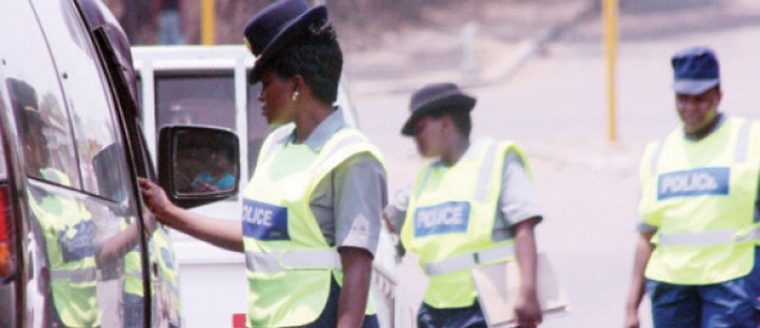
In Harare, it is sometimes said, nothing is what it appears to be. This is certainly the case with the city’s omnipresent police roadblocks, which give the impression of efficient police maintaining order on the roads.
The roadblocks are in fact little more than an officially authorised shakedown of the public and a means by which Zimbabwe’s broke government seeks to fund a massively under-resourced police force.
Numerous violations of the country’s laws occur in the process, and the roadblock dynamics neatly encapsulate, at a micro level, many aspects of Zimbabwe’s broader mis-governance.
The source of the problem is a decision to allow the police to retain the fines they collect. This creates an incentive for the over-regulation of traffic and inducement to find as many motorists as possible guilty of traffic offences, real or imagined.
But supposed enforcement of traffic laws is insufficient to achieve the intended objective –motorists still need to be induced to hand over cash to the police. Accomplishing this requires the police to breach the law at the very moment they claim to be applying it.
The seemingly reasonable request by the police officer to ‘see’ a motorist’s licence is in fact a demand to have custody of it. Disputes as to whether a motorist has violated the law are readily resolved once it’s clear the licence won’t be returned and the motorist won’t be allowed to proceed until guilt is admitted and the ‘fine’ is paid.
Other breaches of the law by the police then follow. Zimbabwe’s criminal law formally pays due regard to the separation of powers. The police thus have no power to find motorists guilty of traffic offences – that is a judicial function. The ‘traffic ticket’ issued by police is in fact a notice to appear in court.
However, as a convenience to all concerned, the law provides a mechanism by which the court appearance may be avoided by admitting the offence and paying a deposit towards the fine which may be imposed by the courts on receipt of the paperwork from the police. It is a constitutional requirement that the fine is paid into the government’s consolidated revenue fund.
In practice, none of this happens. The police no longer carry ‘traffic tickets’ that give motorists the choice of either appearing in court, or admitting guilt and paying the deposit towards the fine.
‘Not guilty’ has been removed as an option by the police, who act as judge, jury and executioner. The usurpation of the judicial function occurs without protest from the courts and the money goes nowhere near central government coffers.
The use of fake receipt books also means that often the money isn’t used to fund police operations either, but is taken as bribes supplementing meagre police pay.
Continued next page
(369 VIEWS)
This post was last modified on September 23, 2017 6:50 am
Page: 1 2
Zimbabwe has been ranked third among the least free countries in Southern Africa but it…
I had always considered it a curse for a wife to die before her husband.…
This is a true story about the challenges and loneliness I faced when my wife…
My first long-form article in booklet form: Why I had a girlfriend two months after…
The editor and publisher of The Insider, Charles Rukuni, has started a whatsapp channel through…
A friend who knows about my legal battle with Zimbabwe’s richest man, Strive Masiyiwa, way…