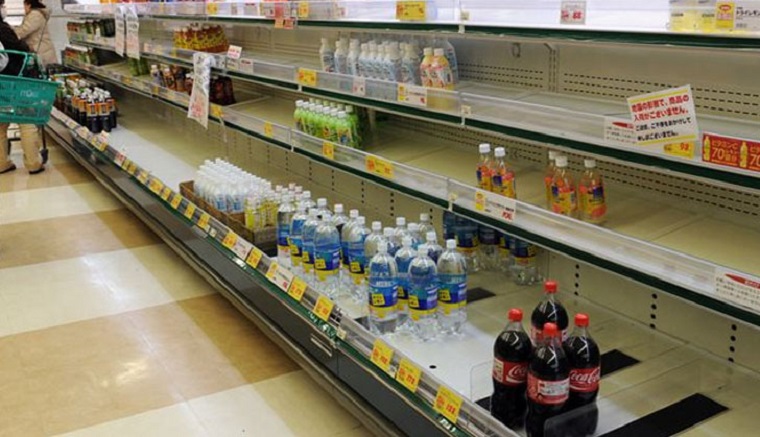
A raft of government subsidies has only made things worse – the subsidised goods are in short supply.
Also in short supply is truthfulness in policy-making.
At the heart of the current crisis is government deception, a make-believe currency and a fictional exchange rate.
President Emmerson Mnangagwa has committed to economic reforms. But this will amount to naught if his administration does not dispense with habits, including disregard for integrity in policy-making. The record isn’t inspiring.
When Reserve Bank of Zimbabwe (RBZ) governor John Mangudya announced plans to introduce bond notes on 4 May 2016, it was an attempt to resolve the shortage of bank notes. But, he couched them as an export incentive scheme backed by a US$200 million facility extended by the African Export Import Bank (Afreximbank).
The notes only came into being because the central bank needed to “mitigate against possible abuses of this facility through capital flight, this facility shall be granted to qualifying foreign exchange earners in bond coins and notes which shall continue to operate alongside the currencies within the multi-currency system and at par with the USD,” Mangudya said at the time.
Just why exporters, who mostly transact electronically, needed their incentives paid in bond notes is a question never sufficiently answered.
As it turned out, this was nothing more than a financial sleight of hand by the central bank. Just one of a litany of deceitful acts by a government which seems to delight in gaslighting the populace.
Perhaps the biggest fiction government has sought to perpetuate, with disastrous consequences, is that the bond note is at par with the United States dollar.
By the time the bond notes were introduced in November 2016, electronic balances on the real time gross settlement system (RTGS) were being discounted by 10% when traded for physical US dollar cash. Predictably, bond notes would fare no better.
Even as inflation quickened and the country’s external position worsened, the authorities held onto the fiction of parity.
But businesses reliant on imports had a different reality. Firms failing to access foreign currency from the inefficient central bank allocation system resorted to the black market, where rates reached a peak of 1:7 in the first week of October.
Continued next page
(506 VIEWS)
Zimbabwe has been ranked third among the least free countries in Southern Africa but it…
I had always considered it a curse for a wife to die before her husband.…
This is a true story about the challenges and loneliness I faced when my wife…
My first long-form article in booklet form: Why I had a girlfriend two months after…
The editor and publisher of The Insider, Charles Rukuni, has started a whatsapp channel through…
A friend who knows about my legal battle with Zimbabwe’s richest man, Strive Masiyiwa, way…