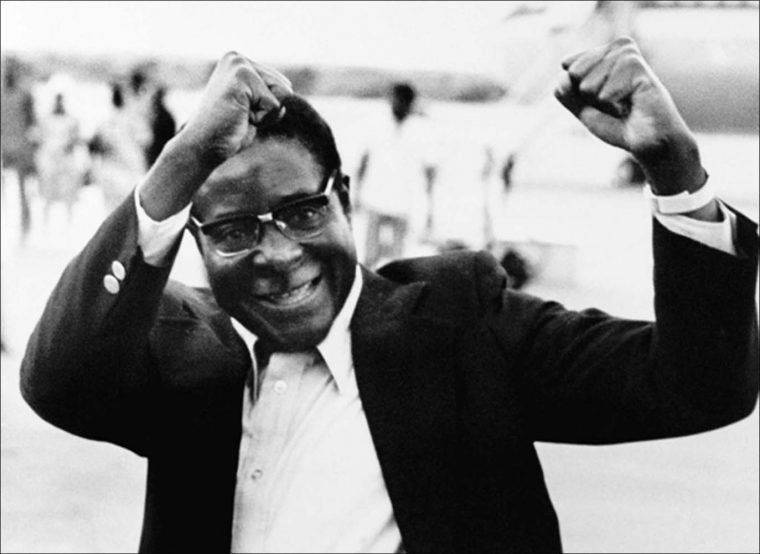
In the years before Mugabe took power, perceptions of him were more cardboard cut-out than reality – ranging from Marxist fanatic at one end of the spectrum to selfless liberation icon at the other.
So it is of little wonder that these views were radically altered when occasional glimpses were replaced by regular acquaintance after he became prime minister of the new Zimbabwe in 1980.
His Rhodesian political nemesis, Ian Smith, was typical, writing of their first meeting that Mugabe was “the antithesis of the communist gangster I had expected”.
Yet, in many cases, the new perceptions of Mugabe were as flawed as the old.
Stale illusions were replaced by fresh ones. In part, this was a psychological phenomenon: out-sized fears – when shown to be false – tended to be replaced by rose-tinted enthusiasm.
It is for this reason that key members of the Rhodesian security apparatus, who had expected the imposition of a communist dictatorship, became as dedicated to Mugabe’s cause as they had previously been to killing him.
Likewise, the British, who had colluded with the Rhodesians to keep Mugabe from power, now became strong supporters and tenaciously clung to the notion that he was a “moderate”.
But there was more to these misconceptions than emotional factors.
Mugabe consciously set out to mislead others in order to manoeuvre them – and he was highly proficient at it.
Behind every statement or action there was, almost invariably, a hidden agenda. Ironically, it is other deceivers – among them, agents of apartheid South Africa in his inner circle – who lay some of this bare through their records of private encounters with Mugabe.
In November 1980, for example, reports appeared in the press that Mugabe’s ZANU-PF government intended to take white farmland without compensation because Britain had allegedly failed to fulfil promises to provide finance for the purchase of land.
A South African source reported to Pretoria that Mugabe had “discussed this matter (with him) before he made it public” and had “intentionally made these statements to try and prod the Brits into making funds available”.
When the source “pointed out to Mugabe the danger of the effect that it would have on … the (confidence of) white farmers … Mugabe’s reaction to this was that he would repudiate it after he had said it. This is exactly what happened”.
Continued next page
(1134 VIEWS)
Zimbabwe has been ranked third among the least free countries in Southern Africa but it…
I had always considered it a curse for a wife to die before her husband.…
This is a true story about the challenges and loneliness I faced when my wife…
My first long-form article in booklet form: Why I had a girlfriend two months after…
The editor and publisher of The Insider, Charles Rukuni, has started a whatsapp channel through…
A friend who knows about my legal battle with Zimbabwe’s richest man, Strive Masiyiwa, way…