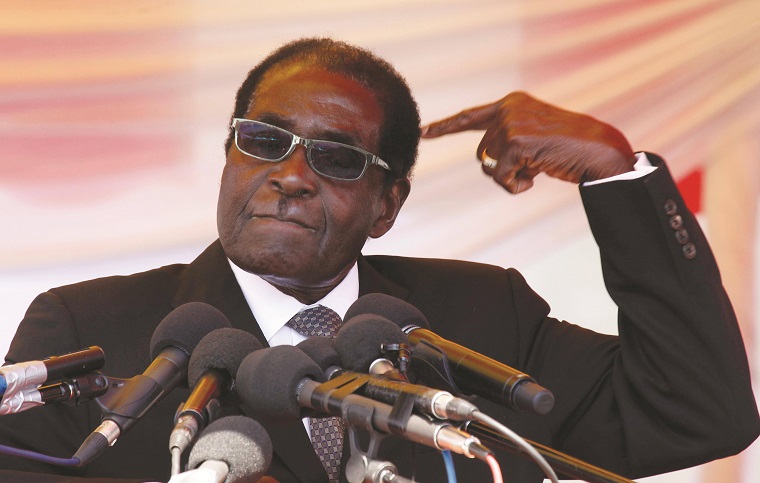
There is a deep fascination with him in the UK. Despite the drama of Brexit, his death was top news across the papers and TV channels.
I was taken aback when I saw his image on a massive news screen at King’s Cross station in London announcing his death.
Once feted by the Queen, now almost universally reviled, what is it about the dramatic tragedy in the narrative of a transition from ‘hero’ to ‘villain’ that so captivates people, but also blinds us to the complexities of history?
This complexity, and the importance of a deeper history, comes across in some of the better reflections on his death.
There is much that’s already been written, but there are a few articles that have stood out for me. The piece ‘Mugabe: a man of more than one story’, for example, highlights the multiple threads of a complex narrative, as does Alex Magaisa’s BSR piece, which urges us not to forget the victims of Mugabe’s regime.
Perhaps surprisingly, but like many Zimbabweans of his age, Tendai Biti, once tortured by the regime, says ‘I don’t feel bitterness. I feel indebtedness’.
The missed opportunities of the liberation are reflected on in many pieces, including by Fadzayi Mahere, who argues that he ‘killed the freedoms he had worked so hard for’.
Roger Southall, meanwhile, reflects on his legacy alongside other liberation party leaders in the region, pointing out that he is ‘as divisive in death as he was in life’.
A typically quirky take comes from Percy Zvomuya focusing on deeper family backgrounds and historical contingencies in the piece, Robert Mugabe: the leader who shouldn’t have been.
And my favourite of all is the 2017 article by Everjoice Win, widely recirculated in the past days, which captured the moment around the ‘coup’, but seems even more apposite today, and reflects the feelings of many.
Why has Mugabe’s passing attracted so much attention, particularly internationally?
Some while ago, Miles Tendi, a Zimbabwean scholar and professor at Oxford University, pointed to the roots of the media fascination with Mugabe in the UK:
“Mugabe is the British media’s bogeyman for everything that is wrong with Africa and one can never escape the naked reality that the fallout from ZANU-PF’s violent eviction of white farmers in Zimbabwe from 2000 onwards, many of whom were British descendants, continues to attract a disproportionate amount of international focus compared to other more severe crises…”
Continued next page
(306 VIEWS)
I had always considered it a curse for a wife to die before her husband.…
This is a true story about the challenges and loneliness I faced when my wife…
My first long-form article in booklet form: Why I had a girlfriend two months after…
The editor and publisher of The Insider, Charles Rukuni, has started a whatsapp channel through…
A friend who knows about my legal battle with Zimbabwe’s richest man, Strive Masiyiwa, way…
Britain says amendment of the Zimbabwe constitution is a sovereign, legislative matter for Zimbabwe to…