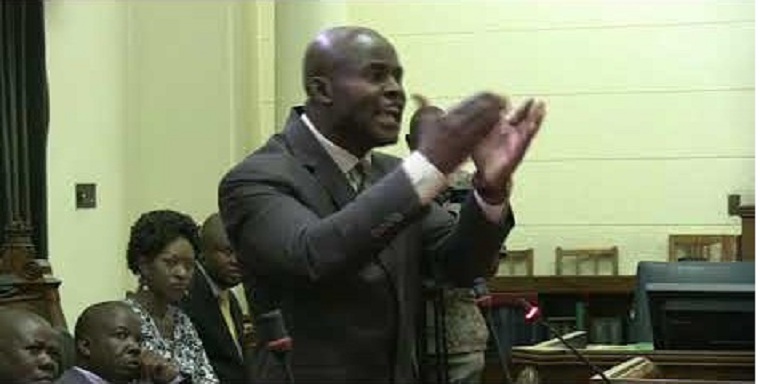
Speaker of Parliament Jacob Mudenda advised him to approach the Constitutional Court if he wanted the issue clarified.
The issue was first raised during question time in Parliament by Movement for Democratic Change vice-chairman Job Sikhala who said Mpofu was interfering with the functions of both the lower and upper courts.
Mliswa said as far as he was aware the constitution only gave powers to investigate and prosecute to the Zimbabwe Anti-Corruption Commission, the Prosecutor-General and the police. So where did the Special Anti-Corruption get its mandate?
Justice Minister Ziyambi Ziyambi said the unit was functioning within its mandate.
“This is purely a special unit within the office of the President with a specific mandate given by His Excellency the President and they do not and have never interfered with the work of any organ that is established in the Constitution,” he said.
Mliswa insisted that the unit’s operations were unconstitutional.
“I therefore, implore the Hon. Minister to tell us the Act which gives Mr. Thabani Mpofu the powers to do what the other constitutional bodies are mandated to do through the Constitution of Zimbabwe and under section 119 of the Constitution, we must uphold provisions of the Constitution. The President cannot violate the Constitution, he is a lawyer,” he said.
Ziyambai said he did not see any conflict at all with established constitutional bodies.
Mudenda chipped in: “I want to advise you Hon. T. Mliswa…. Where you are not clear, you can approach the Constitutional Court to clarify issues for you……. I want to assist Hon. T. Mliswa, be guided by section 167 (2) of the Constitution of Zimbabwe in what I have said.”
Section167 subsection 2 states:
Continued next page
(263 VIEWS)
Zimbabwe has been ranked third among the least free countries in Southern Africa but it…
I had always considered it a curse for a wife to die before her husband.…
This is a true story about the challenges and loneliness I faced when my wife…
My first long-form article in booklet form: Why I had a girlfriend two months after…
The editor and publisher of The Insider, Charles Rukuni, has started a whatsapp channel through…
A friend who knows about my legal battle with Zimbabwe’s richest man, Strive Masiyiwa, way…