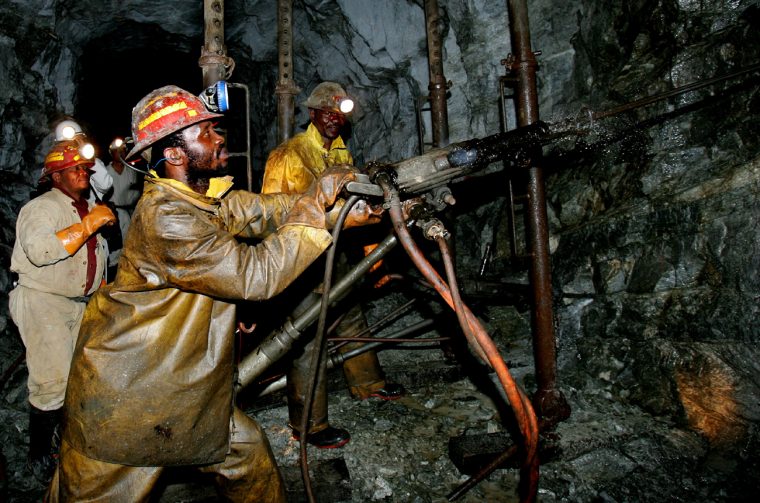
Mineral export receipts are projected to grow 8.7 percent to $2.5 billion next year from $2.3 billion in 2017 driven by the anticipated output growth and modest recovery in international mineral prices.
Presenting the 2018 national budget yesterday, Finance Minister Patrick Chinamasa said the mining sector is expected to grow by 7.5 percent in 2017 on higher output in most minerals, including diamonds, gold and coal.
Chinamasa said overall mineral export receipts were around $2 billion in the 10 months to October, compared to $1.6 billion during the same period in 2016, constituting 25.2 percent of the country’s total exports.
Diamond output stood at 1.8 million carats in the nine months to September, up from 1.3 million recorded during the whole of 2016 attributable to the consolidation of diamond industry.
“The consolidation of the diamond industry, together with the capitalisation of the Zimbabwe Consolidated Diamond Company, saw marked improvement in output,” Chinamasa said.
On gold production, gold purchases at Fidelity Refiners rose 12 percent to 17 163 kg in the 9 months to September relative to the corresponding period last year, driven by small scale miners which accounted for 51 percent of the total gold deliveries in the period.
“Gold deliveries to Fidelity Refiners have benefitted from interventions targeting support to small scale miners by Government, as well as plugging of leakages through joint compliance monitoring,” Chinamasa said.
The Finance Minister said the country remains on course to meet the target of 24.5 tonnes of gold deliveries through Fidelity for the entire 2017.
Additionally, coal production increased from 30 000 tonnes per month in the first quarter of 2017, to about 300 000 tonnes per month.
This translates to a cumulative coal output of 2.4 million tonnes by the third quarter, from 363 000 tonnes recorded in the first quarter, attributable to recapitalisation and management changes at Hwange Colliery, Chinamasa said.
Chinamasa said the controversial indigenisation policy will be amended to confine the 51/49 threshold to only two minerals, namely diamonds and platinum, in the extractive sector.
The indigenisation policy will not apply to other minerals nor other sectors, a plausible move in attracting foreign investment.
“The 51/49 threshold will not apply to the rest of the extractive sector, nor will it apply to the other sectors of the economy, which will be open to any investor regardless of nationality,” Chinamasa said.
Government will continue to review mining fees and charges in order to enhance the viability of the mining sector, through promotion of investment in prospecting and exploration activities, as well as promoting beneficiation, Chinamasa said.
Mining output is expected to grow by 6.1 percent next year. – The Source
(215 VIEWS)
Zimbabwe has been ranked third among the least free countries in Southern Africa but it…
I had always considered it a curse for a wife to die before her husband.…
This is a true story about the challenges and loneliness I faced when my wife…
My first long-form article in booklet form: Why I had a girlfriend two months after…
The editor and publisher of The Insider, Charles Rukuni, has started a whatsapp channel through…
A friend who knows about my legal battle with Zimbabwe’s richest man, Strive Masiyiwa, way…