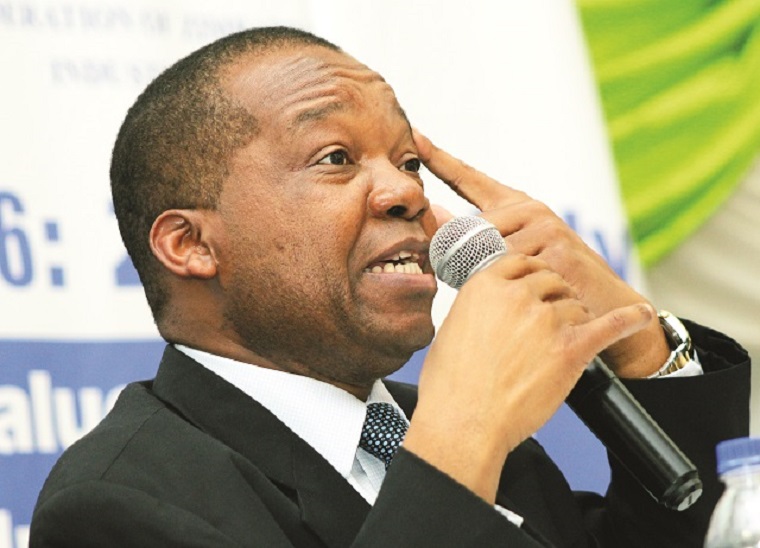
Parliamentarians are in Bulawayo attending a pre-2019 budget seminar.
Mangudya said Zimbabwe banks currently had electronic balances of nearly $10 billion.
“In that amount, only 4.5 percent are coins and notes, which is your bond notes and coins. Therefore, if we remove them they won’t resolve the problem. The problem is about the 95.5 percent held as RTGS balances in your accounts. Where is it coming from?”
Quite a rhetorical question coming from the person who is supposed to control money movements in the country.
But he added: “So, the question which we should be asking ourselves is where is this money coming from? That’s why we need to plug the holes not from the medium of exchange that you have taken away from the bank. The money in your account didn’t come from bond notes, not at all.”
Mangudya also defended the exchange rate of the bond note to the United States dollar at one-to-one arguing: “The reason why we have got 1:1 is because there are essential products that we need to import in this economy to have price stability. Our fuel, which is coming here and people are buying it using RTGS, EcoCash whatever it is at 1:1. Your electricity today is imported at 1:1.”
He said the only way out was to increase production.
“There is no economy in the world which can have a strong currency without a strong base. Your currency is as good as your production, and what are you producing Zimbabweans?
“If you are producing nothing you can’t have a higher currency, which is very strong. Therefore, the challenge that you are facing of foreign currency shortages is because we are not working and we must start working very hard.”
(474 VIEWS)
Britain says amendment of the Zimbabwe constitution is a sovereign, legislative matter for Zimbabwe to…
It is now 47 years since I wrote the short story below for a South…
Zimbabwe has released its 2026 monetary policy statement in which it seeks to stabilise its…
Far from it, on paper that is. Ignatius Chombo was one of the longest serving…
Zimbabwe on Thursday announced a ZiG290.9 billion budget with revenue expected to be ZiG287.6 billion,…
The International Monetary Fund says Zimbabwe’s economic recovery in 2025 is stronger than previously anticipated…