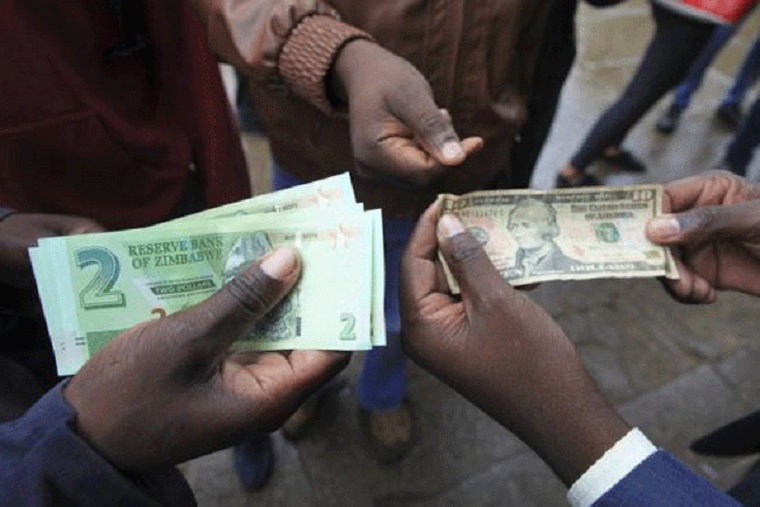
A leading economics professor has urged Zimbabwe’s government to make its controversial bond note currency tradable on the foreign currency market to reduce its externalisation and tackle persistent cash shortages.
The bond notes, a quasi-currency introduced in November last year under a $200 million Afreximbank scheme to ease a crippling dollar note shortage, trades at par with the greenback but is legal tender only in the southern African country.
While the bond note has remained largely fungible against the US dollar in retail, there are fears that it could crash if allowed to float.
The central bank has so far released $175 million worth of bond notes and is looking to print more.
University of Zimbabwe economics professor and government advisor Ashok Chakravati told a business breakfast this morning that government should let the market decide the bond note’s true value.
“The problem with the bond note in my view is the peg with the US dollar, that is the main problem. We have a black market and what is happening is that anyone who wants to trade the bond note for a discount or premium, has to do it illegally on Fourth street or in Messina or at the Road Port or somewhere else,” Chakravati said.
“In my opinion government should remove the peg from the bond note, all that trading happening across the border will come back into Zimbabwe, why should it trade outside the country when you would like it over here.”
Continued next page
(254 VIEWS)
This post was last modified on July 25, 2017 6:33 pm
Page: 1 2
Zimbabwe has been ranked third among the least free countries in Southern Africa but it…
I had always considered it a curse for a wife to die before her husband.…
This is a true story about the challenges and loneliness I faced when my wife…
My first long-form article in booklet form: Why I had a girlfriend two months after…
The editor and publisher of The Insider, Charles Rukuni, has started a whatsapp channel through…
A friend who knows about my legal battle with Zimbabwe’s richest man, Strive Masiyiwa, way…