Some said it was not his duty. That was a monetary policy issue for the Reserve Bank of Zimbabwe.
Others said he should simply have abolished the bond note. He should have adopted the South African rand instead.
The pressure on currency reform emanated from the monetary and fiscal policies that the government announced on 1 October which resulted in the bond note and electronic money plummeting against the United States dollar when the central bank insisted they were at par.
Central Bank governor John Mangudya re-introduced foreign currency accounts which appeared to be a signal that the greenback and the bond note were not at par but the central bank did so because those who earned foreign currency were being short-changed by banks which quickly turned their money into bond notes thus preventing the account holders from using their hard-earned foreign currency as and when they wanted.
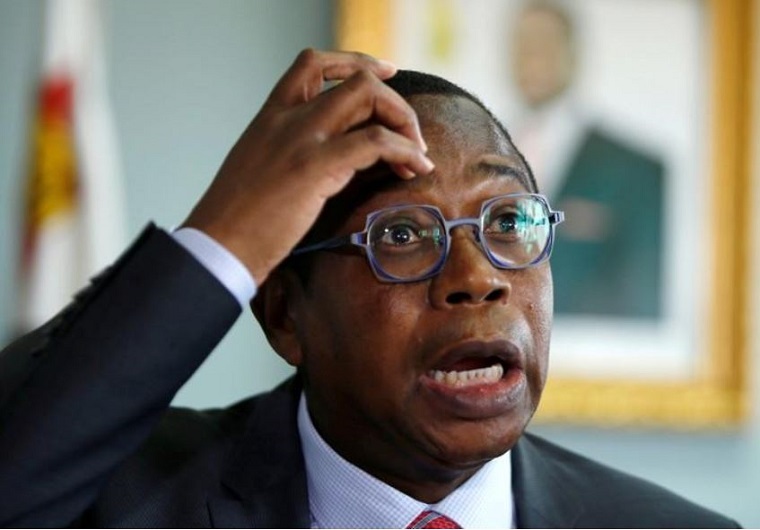
Addressing bankers last week, Ncube said he had indeed addressed the currency issue in his budget but people did not listen to what he said.
He said there were four major things that drive the value of an exchange rate.
“Econometricians may throw in other variables, business confidence, easy of doing business and so forth but these are just additional things,” he said.
“So just by tackling the budget deficit which then tackles the growth in money supply, you are closing the tap, slow down the issuance of treasury bills, dealing with your current account deficit, beginning to build reserves and so forth you are moving forward in dealing with the value of the currency . That’s the foundation you need for future currency reform. That’s where we are headed.”
Ncube said people were focusing too much on the negative and were not seeing the positive things that were happening.
The government had already cut down on the government deficit by balancing its books in September and coming up with a primary surplus in October.
Ncube seems to be on the right track because according to Philip Haslam and Russell Lamberti it is only when “we understand what causes the problem in the first place (that) the essence of the solution becomes self-evident”.
Haslam and Lamberti have written a book: When money destroys nations- how hyperinflation ruined Zimbabwe, how ordinary people survived, and warnings for nations that print money.
They argue that “if deficit spending and money printing ruin economies, we should establish a system that removes the State’s ability to go into debt and to control and print money”.
But they add: “In the unnecessary complexity of modern economic jargon, the obvious problems with money printing and excessive debt have become blurred in society’s consciousness.”
(180 VIEWS)
Britain says amendment of the Zimbabwe constitution is a sovereign, legislative matter for Zimbabwe to…
It is now 47 years since I wrote the short story below for a South…
Zimbabwe has released its 2026 monetary policy statement in which it seeks to stabilise its…
Far from it, on paper that is. Ignatius Chombo was one of the longest serving…
Zimbabwe on Thursday announced a ZiG290.9 billion budget with revenue expected to be ZiG287.6 billion,…
The International Monetary Fund says Zimbabwe’s economic recovery in 2025 is stronger than previously anticipated…