This move aims to provide a stable means of payment and a store of value for Zimbabweans. The implementation will take place in two phases, with the first focused on investment purposes and the second on facilitating transactions and settlements.
On 28 April, governor John Mangudya announced that the RBZ would begin issuing gold-backed digital tokens as part of its Monetary Policy Committee resolution from 28 March, 2023.
The primary goal of this initiative is to expand the value-preserving instruments available to Zimbabwe’s economy, enhance the divisibility of investment instruments, and widen public access and usage.
The first phase of the implementation will see gold-backed digital tokens issued for investment purposes with a vesting period of 180 days.
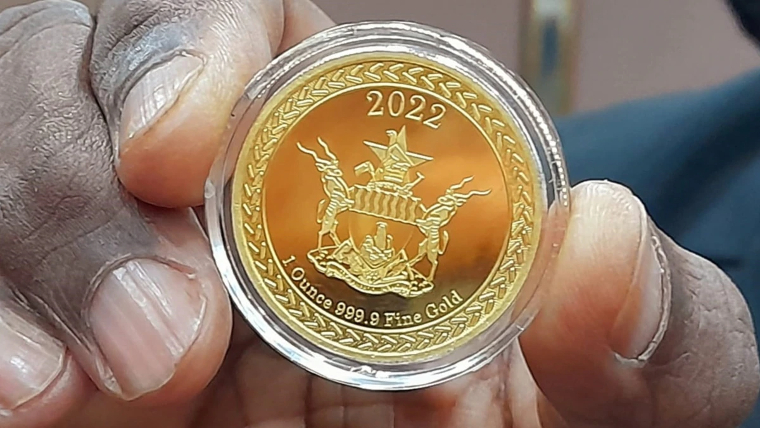
They will be redeemable in the same manner as existing physical gold coins. The tokens will be available for sale through banks in both foreign currency and Zimbabwean dollars.
Banks will create dedicated accounts or e-gold wallets for holding the gold-backed digital tokens. Additionally, holders of physical gold coins can choose to exchange or convert them into gold-backed digital tokens through the banking system.
The second phase of the implementation will enable gold-backed digital tokens held in e-gold wallets or e-gold cards to be tradable, facilitating Person-to-Person (P2P) and Person-to-Business (P2B) transactions and settlements.
As a result, the gold-backed digital tokens will serve as both a means of payment and a store of value.
The pricing of gold-backed digital tokens in a foreign currency will remain consistent with the pricing model of physical gold coins, as guided by the international gold price determined by the London Bullion Market Association (LBMA) PM fix.
Payment for the gold-backed digital tokens or physical gold coins in Zimbabwean dollars will maintain a 20% margin above the willing-buyer willing-seller interbank mid-rate.
The introduction of gold-backed digital tokens is a significant step in Zimbabwe’s de-dollarisation strategy.
By offering a stable and reliable means of payment, the RBZ hopes to strengthen the country’s economy and alleviate some of the challenges faced by Zimbabweans.
The two-phase implementation plan ensures that the tokens are first introduced as investment instruments before enabling their use in everyday transactions.
This innovative approach to monetary policy has the potential to boost confidence in the Zimbabwean dollar while providing citizens with a secure and stable means of exchange.
The gold-backed digital tokens may also help attract foreign investors and promote economic growth.
However, it remains to be seen how the market will respond to these new instruments and whether they will be successful in achieving their intended objectives.- Cryptopolitan
(211 VIEWS)
Four of the world’s largest banks are all in China. Assets of the Industrial and…
Zimbabwe is one of the 27 countries in the world where the richest 0.1% of…
Zimbabwe has been ranked third among the least free countries in Southern Africa but it…
I had always considered it a curse for a wife to die before her husband.…
This is a true story about the challenges and loneliness I faced when my wife…
My first long-form article in booklet form: Why I had a girlfriend two months after…
View Comments