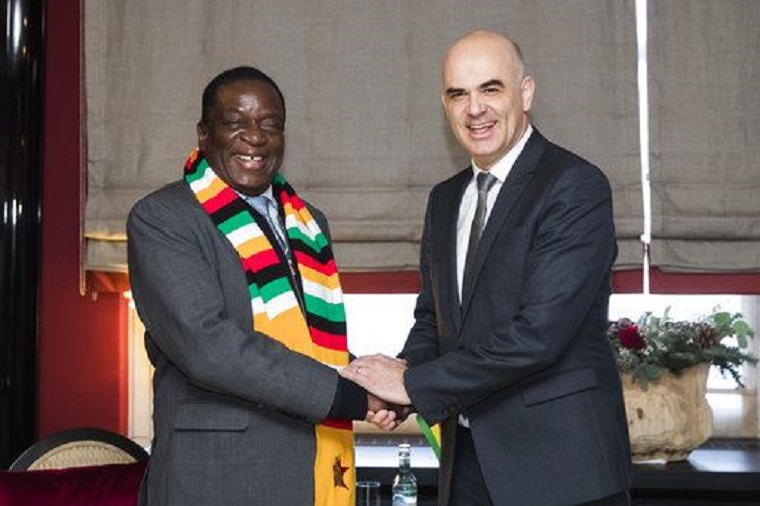
Meanwhile, his successor, Emerson Mnangagwa, is running strong in a campaign to earn an electoral mandate of his own. He recently survived a bomb attempt on his life during a rally in the city of Bulawayo, and responded by pointing the finger at Grace Mugabe and her allies. He has provided no evidence that she was involved.
Without Mugabe on the ballot in an election she was once keen to contest, Mnangagwa’s main opponent is instead an opposition alliance led by Nelson Chamisa of the Movement for Democratic Change (MDC).
Chamisa has brought along with him many senior MDC figures who were alienated by his predecessor as opposition leader, the late Morgan Tsvangirai. But his party is far from fully united. And among those excluded are leaders from the Ndebele-speaking west of the country, an area with its own grievances against Mnangagwa for his involvement in the violent pogroms of the 1980s – the Gukurahundi – which left many thousands dead.
Mnangagwa’s would-be assassins in Bulawayo, capital of the western provinces, could just have easily have been Ndebele separatists as supporters of Grace Mugabe. Whatever the truth, Mnangagwa will be happy to leave the opposition divided – but nonetheless, ZANU-PF is not going to roll over and die just because the Mugabes are out of the picture.
In fact, Mnangagwa has made a virtue of not being Mugabe, promising a new start and making the claim that only he has the authoritative standing to persuade the West to reinvest in his country’s battered economy. The West, however, has made it clear that the key precondition for any major reinvestment would be a clean election.
This will probably be the cleanest election for many years in Zimbabwe. Chamisa and his MDC Alliance have gone largely unmolested, and Chamisa has held rallies in what were once no-go regions for the opposition. The MDC platform has been covered on state television, and a real effort has been made to give public indications of a fair campaign.
But questions still linger over the integrity of the electoral roll, the printing and vetting of the ballot papers, and how any biometric element of the election would work. And there are still plenty of senior military figures in Mnangagwa’s cabinet and inner circle.
Continued next page
(812 VIEWS)
This post was last modified on July 5, 2018 9:17 am
Page: 1 2
Zimbabwe has been ranked third among the least free countries in Southern Africa but it…
I had always considered it a curse for a wife to die before her husband.…
This is a true story about the challenges and loneliness I faced when my wife…
My first long-form article in booklet form: Why I had a girlfriend two months after…
The editor and publisher of The Insider, Charles Rukuni, has started a whatsapp channel through…
A friend who knows about my legal battle with Zimbabwe’s richest man, Strive Masiyiwa, way…