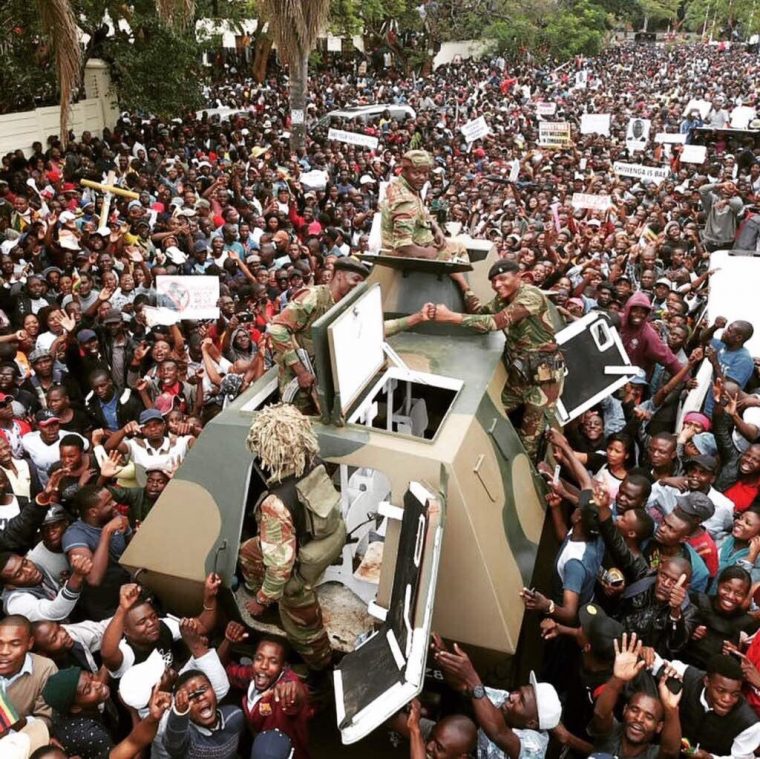
The last twelve months have been a confusing time for African democracy. We have seen coups that didn’t look like coups and elections that didn’t look like elections. In this sense, it was a year of illusions.
As in 2016, the broad trend is clear: with a number of notable exceptions, the gains made in the early 1990s are under threat from governments with little commitment to plural politics.
It’s true that 2017 provided further evidence of the danger of democratic backsliding. But it also saw powerful presidents suffer embarrassing setbacks in a number of countries.
So what lessons does 2017 have to teach us, and what is going to grab the headlines next year?
1. Don’t mess with the military
In November 2017 the Zimbabwean Defence Forces placed President Robert Mugabe under house arrest and subsequently orchestrated his removal. The intervention was cleverly framed as a corrective action to remove “criminal” elements around the president. In reality, it represented an effort by the military to protect its own political and economic interests.
Once General Chiwenga had spoken out against the sacking of Emmerson Mnangagwa – the political leader closest to the security forces – he faced being replaced, arrested and charged with treason. In other words, Chiwenga had little to lose and everything to gain from military intervention. The ousting of Mugabe therefore serves as an important reminder that despite thirty years of multiparty elections in Africa, messing with the military can still be fatal.
2. If you’re polite, you can get away with murder
The military intervention in Zimbabwe was also remarkable for being the politest coup in history. To avoid domestic and international criticism, the coup plotters went to remarkable lengths to make their usurpation of power look constitutional. Instead of being executed or sent into exile, Mugabe was allowed to remain in his house and posed for pictures with his captors.
Amazingly, the theatre worked. Delighted to see the back of Mugabe, even some committed democrats were prepared to hold their nose and welcome the “transition”.
The willingness of many people to play along with the idea of a bloodless coup is deeply problematic, first because it may encourage security forces in other countries to try and repeat the trick, and second because it is false.
There are growing reports that a number of deaths and human rights abuses occurred as the military moved to exert political control. When the testimonies of the victims are finally heard, it will cast a very different light on the coup and its aftermath.
Continued next page
(599 VIEWS)
This post was last modified on December 12, 2017 8:58 am
Zimbabwe has been ranked third among the least free countries in Southern Africa but it…
I had always considered it a curse for a wife to die before her husband.…
This is a true story about the challenges and loneliness I faced when my wife…
My first long-form article in booklet form: Why I had a girlfriend two months after…
The editor and publisher of The Insider, Charles Rukuni, has started a whatsapp channel through…
A friend who knows about my legal battle with Zimbabwe’s richest man, Strive Masiyiwa, way…