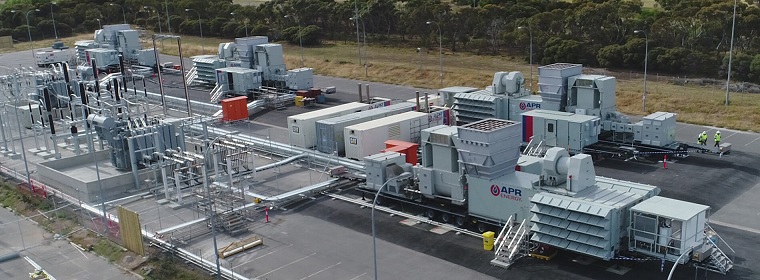
APR Energy, based in Florida, was the winning bidder in a tender to supply emergency diesel electricity, at a time the country was in a power crisis. But authorities rejected APR and then broke tender rules to handpick Kuda Tagwirei’s Sakunda instead, according to a 2019 PriceWaterhouseCoopers (PwC) audit report into power utility ZESA.
The report is currently under scrutiny at Parliament’s Public Accounts Committee.
The auditors say the Office of the President and Cabinet (OPC) on 26 November 2015, ordered the Ministry of Energy to conduct due diligence on Sakunda’s submission for the project. This is despite Sakunda not having participated in the tender, in which APR competed with two other firms, Glasgow-based Aggreko and Altaaqa of the UAE.
Auditors interviewed Patson Mbiriri, then Permanent Secretary in the Ministry of Energy, on why government dumped APR.
“He stated that the concerns were arising from the fact that APR was an American company and specifically because the company was owned by Ms Madeleine Albright,” the audit report says. “Mr Mbiriri stated that the concern was that APR, considering its shareholding, on a national project would have posed a serious security threat to Zimbabwe.”
In 2015, Albright’s investment fund, Albright Capital Management, and Quantum Strategic Partners, a hedge fund tied to billionaire George Soros, bought a controlling stake in APR for US$250 million. The transaction happened around the same time that APR had placed its bid for the diesel power plant in Zimbabwe.
The ruling ZANU-PF government has also routinely accused Soros of funding its opponents.
APR’s treatment has been a sore point in already strained relations between Zimbabwe and America.
“American firm won tender and was ready to provide top-quality construction of Dema Power Plant in 2016, but the contract was taken away and given to Sakunda, who never bid on the tender,” the US embassy tweeted in 2019.
The US last year imposed sanctions on Tagwirei and Sakunda, citing his alleged role in government corruption.
APR supplies small-scale power plants that can be installed quickly to work around short-term power supply problems. It has a presence in Botswana, Angola and other African counties, a factor that had worked in its favour during adjudication.
Continued next page
(291 VIEWS)
This post was last modified on March 24, 2021 8:52 pm
Page: 1 2
Zimbabwe has been ranked third among the least free countries in Southern Africa but it…
I had always considered it a curse for a wife to die before her husband.…
This is a true story about the challenges and loneliness I faced when my wife…
My first long-form article in booklet form: Why I had a girlfriend two months after…
The editor and publisher of The Insider, Charles Rukuni, has started a whatsapp channel through…
A friend who knows about my legal battle with Zimbabwe’s richest man, Strive Masiyiwa, way…