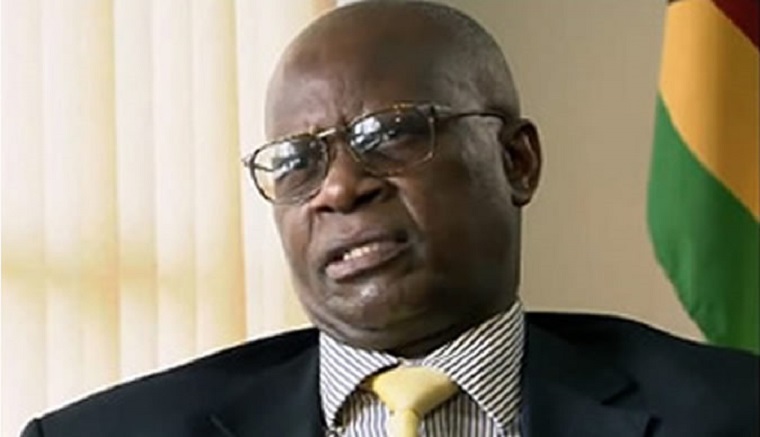
Finance Minister Patrick Chinamasa yesterday scrapped the 15 percent value added tax on basic commodities that came into effect at the beginning of this month following an outcry from the public and said he will have to consult the people on how else the government can raise revenue.
In a ministerial statement in Parliament yesterday, Chinamasa said he needed guidance from the House so that they could come up with something to tax.
“Following the debate that took place here and stakeholder representations, wherein concerns have been raised regarding potential informalisation due to perceived price increase, I propose to shelve the implementation of Statutory Instrument 20 of 2017 which levies VAT on potatoes, rice, margarine, maheu and meat products,” Chinamasa said.
“This will allow for further consultation with relevant stakeholders and those consultations, I will start them with this august House. I need the august House to give me guidance.
“I must tax something to raise money to pay for service delivery, allowances, and wages. So, we need to have guidance so that we understand and agree on which items to tax. So, the consultations will start with this august House.”
Full statement:
MINISTERIAL STATEMENT
CURRENT STATUS OF VAT ON BASIC GOODS
THE MINISTER OF FINANCE AND ECONOMIC DEVELOPMENT (HON. CHINAMASA): Mr. Speaker Sir I crave the indulgence of the House to issue a Ministerial Statement. The Ministerial Statement is concerning the current status of the VAT on basic goods.
Mr. Speaker Sir, you will recall that in the 2017 National Budget, I propose to introduce VAT at a standard rate of 15% on products which include rice, margarine, cereals, maheu, potatoes, meat (pork, beef, fish and chicken). The basis for standard rating the products is mainly due to the need to rationalise the schedule of zero rated and exempt goods in order to broaden the tax base and minimise the cost of tax administration.
Mr. Speaker Sir, Zimbabwe, together with other SADC Member States, has ratified the SADC Protocol on Finance and Investment. Under the Protocol, Member States are mandated to harmonise taxation matters and coordinate tax regimes.
Continued next page
(211 VIEWS)
This post was last modified on February 8, 2017 2:30 pm
Four of the world’s largest banks are all in China. Assets of the Industrial and…
Zimbabwe is one of the 27 countries in the world where the richest 0.1% of…
Zimbabwe has been ranked third among the least free countries in Southern Africa but it…
I had always considered it a curse for a wife to die before her husband.…
This is a true story about the challenges and loneliness I faced when my wife…
My first long-form article in booklet form: Why I had a girlfriend two months after…