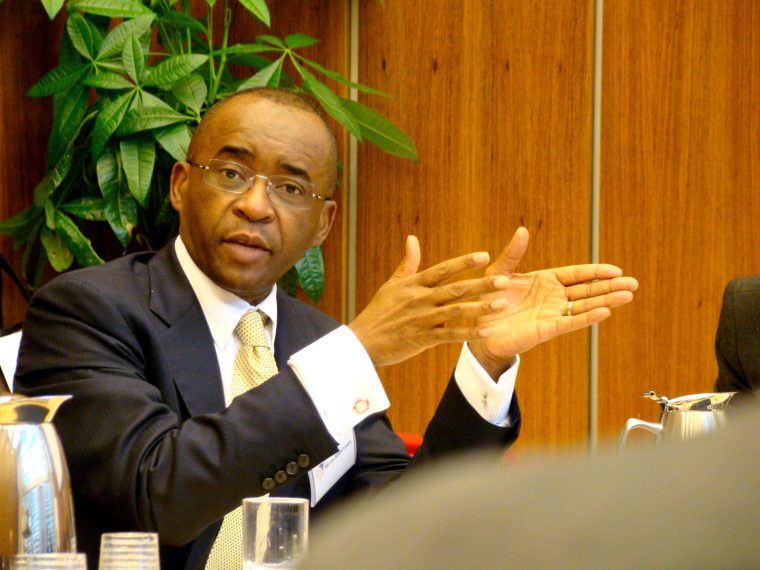
And Masiyiwa seems to be deliberately deleting this from his history, instead promoting that of his persecution by the same people that built him.
Masiyiwa made history two weeks ago when he made it into the London Sunday Times Rich list to become the first black billionaire in the UK.
According to the British paper: “Strive Masiyiwa fled civil unrest in his homeland at the age of seven and later waged a five-year battle against Robert Mugabe’s regime to launch his business.
“Now he has become the first black billionaire to break into The Sunday Times Rich List with his wealth estimated to be £1.087 billion………
“Born in what was then Rhodesia in 1961, Masiyiwa and his parents fled to neighbouring Zambia amid the unrest that followed the country’s declaration of independence from Britain four years later.
“As the family rebuilt their lives, they found themselves living next door to a British family who educated their son at Holt School, a private boarding school in Edinburgh. Masiyiwa began studying there at the age of 12 when the success of his mother’s businesses provided the money to pay for his fees and flights.
“After Holt, Masiyiwa, who has described his late mother as a ‘lioness mum’, studied electrical engineering at Cardiff University. He later returned to Zimbabwe to work for the state-owned telephone company ZPTC, where he grew frustrated with the bureaucracy of the public sector.
“In 1993 he tried to launch his mobile phone provider, Econet. The Mugabe regime denied him a licence and so the matter went to court, where Masiyiwa successfully claimed that a state monopoly of phone services amounted to a violation of freedom of speech.
“A ruling in 1998 finally granted a licence to Econet but Masiyiwa fled Zimbabwe two years later after deteriorating relations with the Harare government. He has never returned to his homeland.”
The story is totally silent about Masiyiwa’s first company, Retrofit, which he started while still employed by the Posts and Telecommunications Corporation, now Telone.
The company was one of the biggest beneficiaries of the country’s first indigenisation programme and was awarded numerous contracts with Masiyiwa himself admitting that his biggest client was the government of Zimbabwe.
Continued next page
(274 VIEWS)
This post was last modified on May 1, 2026 11:34 am
Page: 1 2
Zimbabwe has been ranked third among the least free countries in Southern Africa but it…
I had always considered it a curse for a wife to die before her husband.…
This is a true story about the challenges and loneliness I faced when my wife…
My first long-form article in booklet form: Why I had a girlfriend two months after…
The editor and publisher of The Insider, Charles Rukuni, has started a whatsapp channel through…
A friend who knows about my legal battle with Zimbabwe’s richest man, Strive Masiyiwa, way…