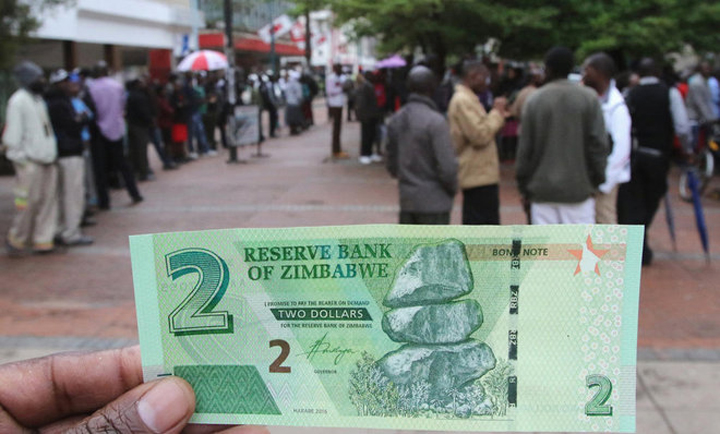
The bond notes have arrived! Well at least a $2 one and a $1 coin. Subject to street protests, court cases, beatings and arrests, and the object of both ridicule and fear, never has a new form of exchange been subject to such intense – and prolonged – debate.
I got my first note in a bar in Mvurwi on the day they were released, and they have been circulating widely since. While, the Reserve Bank of Zimbabwe (RBZ) didn’t follow my advice for the design and instead opted for the famous Epworth balancing rocks on one side and a picture of parliament and the Heroes Acre flame on the other, they certainly look like ‘real’ money.
But exchange is all about trust and confidence, and that has been in short supply. The RBZ’s endless TV adverts and the full page spreads in the newspapers, along with the calming words of a string of ministers, will not satisfy everyone.
The bond notes are supposed to provide an incentive for those who export, and aimed to preventing the massive expatriation of US dollars.
Zimbabwe has become the ‘bureau de change’ of the region, with foreigners joining local elites in removing valuable currency reserves. The result has been a massive liquidity crunch, with less and less physical cash circulating.
Yet the spectre of a return to the Zimbabwe dollar, and a return to money printing and hyperinflation is ever present.
The trauma of 2008 is very recent, and memories last. Of course Zimbabweans have had bond coins for a while, and they appeared without any fuss. In the absence of small change, and as an alternative to endless supplies of boiled sweets and lollipops as change in supermarkets, the small denomination bond coins were widely welcomed.
The government has assured the population that the new bond notes are backed by a US$200m bank loan and only that amount will be issued, although the details of the deal with Afrexim bank remain opaque.
With such backing, it is argued, the new notes are ‘real’, exchangeable one to one with the US dollar. In most transactions this seems to be the case and over two weeks I have not had a bond note refused, although parallel trading to secure US dollars has inevitably started with the exchange apparently currently at 1:0.7.
The fear certainly exists that with new control on monetary policy, there will be a temptation to print more, with or without security, and this will get out of hand once again, with local accounts filled with useless bond notes, as was the case with the ill-fated Zimbabwe dollar.
Continued next page
(398 VIEWS)
This post was last modified on December 12, 2016 11:47 am
Zimbabwe has been ranked third among the least free countries in Southern Africa but it…
I had always considered it a curse for a wife to die before her husband.…
This is a true story about the challenges and loneliness I faced when my wife…
My first long-form article in booklet form: Why I had a girlfriend two months after…
The editor and publisher of The Insider, Charles Rukuni, has started a whatsapp channel through…
A friend who knows about my legal battle with Zimbabwe’s richest man, Strive Masiyiwa, way…