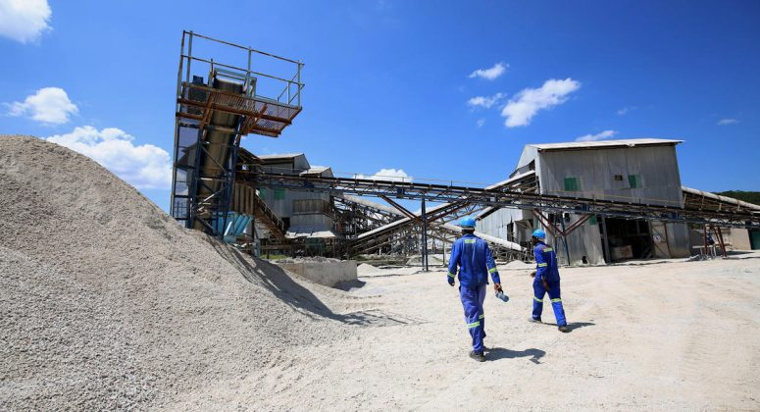
Namibia, the Democratic Republic of the Congo (DRC) and Zimbabwe have significant deposits of lithium – an essential component used to make rechargeable batteries for electronic devices, electric vehicles and other clean technologies – and want their minerals processed locally so they can get better value from the resources.
As the world transitions to green energy, they are capitalising on rising demand for the minerals, especially lithium and cobalt which many countries are banking on to achieve clean energy ambitions.
Namibia last week banned the export of unprocessed lithium and other critical minerals because it wants its economy to benefit more from them. The country’s cabinet last week approved the ban on the export of unprocessed lithium ore, cobalt, manganese, graphite and rare earth minerals – all critical in the global green energy transition.
The southwest African country has significant deposits of lithium as well as rare earth minerals such as dysprosium and terbium used to make magnets in the batteries of electric cars and wind turbines. It is also one of the world’s largest uranium and diamond producers.
However, Namibia’s deputy minister of information and communications technology, Emma Theofelus, said smaller quantities of the minerals might be allowed for export at the discretion of the minister of mines and energy, subject to cabinet endorsement.
China is the dominant player in global lithium processing, accounting for more than half the world’s total. Meanwhile, the United States and Canada refine less than 5 per cent each, according to Benchmark’s lithium forecast. But the US and some other Western nations are not letting China go unchallenged.
Last year, the European Union signed a deal with Namibia to secure rare earth minerals under the bloc’s bid to cut its reliance on China.
The US is also angling for the battery metals and last year signed a memorandum of understanding with Zambia and the DRC to bring funding and expertise into their mining industries.
TechMet, a company in which the US International Development Finance Corporation (DFC) is the second largest shareholder, partnered with Life Zone Metals in Tanzania to build a new facility to process nickel and other critical minerals mined in Tanzania, with the goal of delivering battery-grade nickel to the global market as soon as 2026, according to the White House.
Most mineral-rich African countries have little or no capacity for lithium processing or refining and their ore or mineral concentrate is usually exported to countries such as China for value adding to make lithium-ion batteries.
Continued next page
(157 VIEWS)
Page: 1 2
Zimbabwe has been ranked third among the least free countries in Southern Africa but it…
I had always considered it a curse for a wife to die before her husband.…
This is a true story about the challenges and loneliness I faced when my wife…
My first long-form article in booklet form: Why I had a girlfriend two months after…
The editor and publisher of The Insider, Charles Rukuni, has started a whatsapp channel through…
A friend who knows about my legal battle with Zimbabwe’s richest man, Strive Masiyiwa, way…