With the United States’ presidential election on November 8, and a series of elections and other political decisions fast approaching in Europe, now is a good time to ask whether the global economy is in good enough shape to withstand another major negative shock.
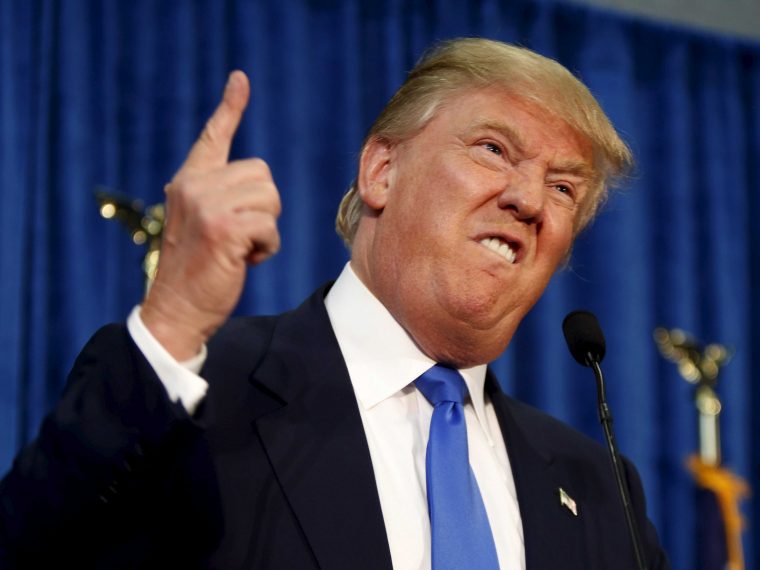
The answer, unfortunately, is that growth and employment around the world look fragile. A big adverse surprise – like the election of Donald Trump in the US – would likely cause the stock market to crash and plunge the world into recession.
There is always a great deal of insight in the International Monetary Fund’s semi-annual economic outlook, which is based on detailed data from around the world. And, because the latest version was published in early October, it is particularly relevant.
Table 1.1 of the Fund’s World Economic Outlook covers the main points: a baseline forecast of 3.1% global GDP growth this year and 3.4% in 2017. This represented a nudge down from the projections in April, with signs of weakening perceived in the US, the eurozone, and of course the United Kingdom (grappling with the consequences of impending Brexit – the big and potentially traumatic step of leaving the European Union).
The most obvious dark cloud on the global horizon is Europe. The British issues are not helping, but the deeper issues continue to be related to the eurozone itself (Britain never adopted the euro). The headline growth number in Spain is somewhat encouraging, continuing to show some rebound. But the ongoing gloom about Italy – the third-largest eurozone economy, growing at less than 1% per year – is a serious matter.
Compounding these macroeconomic issues is the continuing pressure on eurozone banks. These banks have never fully recovered from earlier losses, and their equity capital levels remain low relative to international competitors (like the US) and to what investors regard as reasonable.
The bigger problem remains uncertainty about who is on the hook if a bank’s losses imply potential insolvency. These banks are clearly too big to fail – no European government in its right mind would allow a default on bank debt. But there is no agreement on how to share bank losses across countries.
Taken as a whole, the eurozone has enough fiscal capacity to stand behind its banks. But, unfortunately, doing so is still a country-by-country decision – the collective mechanisms for recapitalizing European banks remain partial and far too weak.
Continued next page
(293 VIEWS)
This post was last modified on October 30, 2016 1:31 pm
Page: 1 2
At least four million people in Zimbabwe reported that they had gone without food on…
Four of the world’s largest banks are all in China. Assets of the Industrial and…
Zimbabwe is one of the 27 countries in the world where the richest 0.1% of…
Zimbabwe has been ranked third among the least free countries in Southern Africa but it…
I had always considered it a curse for a wife to die before her husband.…
This is a true story about the challenges and loneliness I faced when my wife…